Bryan:
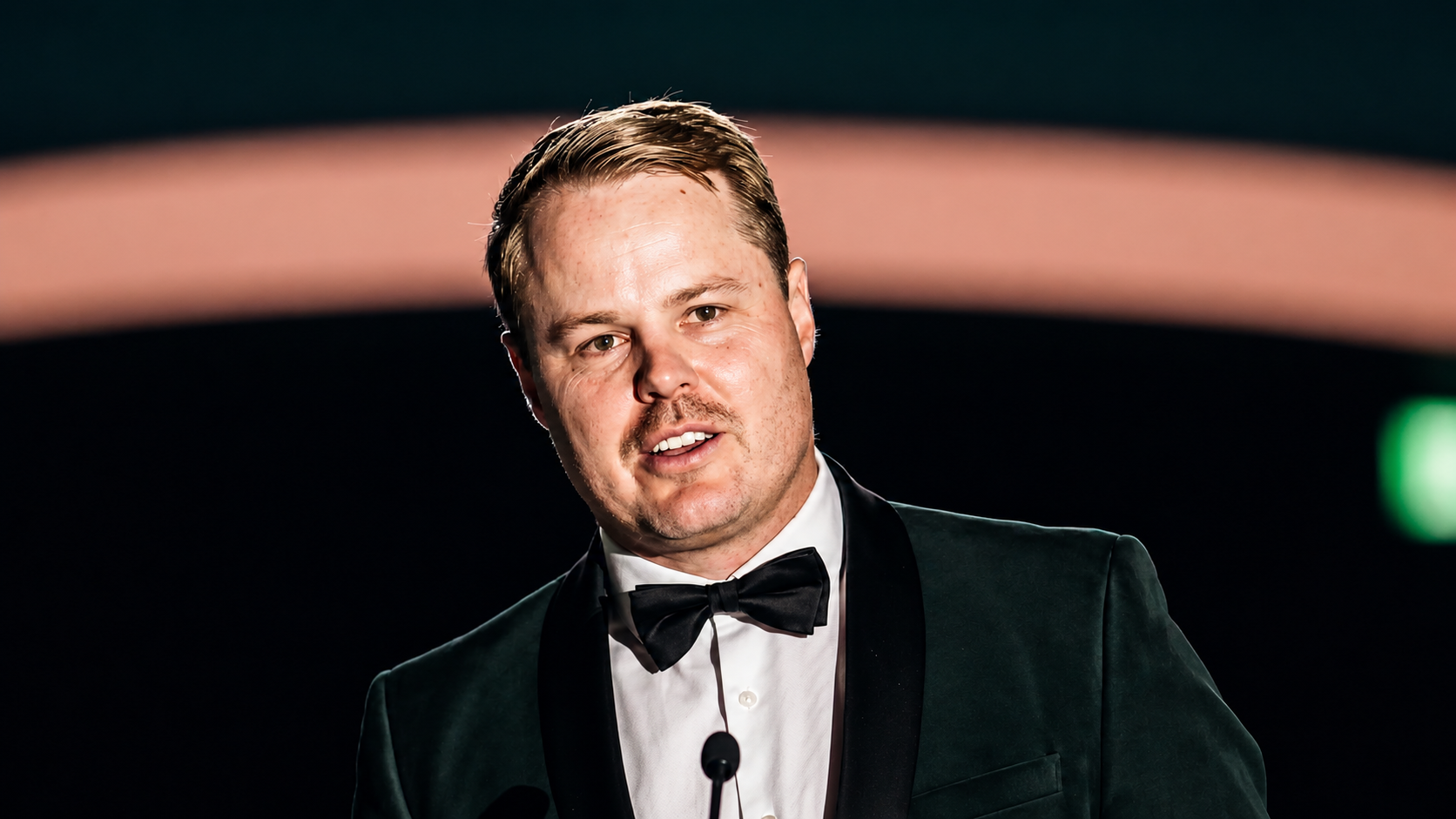
Henning Klopper speaks about Wagyu with the familiarity of someone who has spent years inside the industry itself. The conversation moves easily between farming, hospitality, operations, and the technical realities behind a product most people simply experience as “a really good burger.”
Alongside business partner Devin Wells, Henning helped build the retail side of Zuney while remaining closely connected to the farming operation established by their fathers in the Eastern Cape. He later served on the board of the Wagyu Society of South Africa, deepening an already hands-on understanding of the industry.
Bryan Welker and Stefan le Roux sat down with Henning to unpack the real mechanics of Wagyu, why simplicity wins in hospitality, and what it takes to scale without losing the plot.
The Good Business Journal: You grew up between Johannesburg, New York, and the Eastern Cape. How did that shape you?
Henning:
I was born in Johannesburg. When I was six, my dad took a stockbroking job in New York, and we moved.
After three years we moved back to South Africa, and not long after that, my dad bought a dairy farm in the Zuney Valley in the Eastern Cape. It was meant to be retirement but it became something else entirely.
For about eight years my mom ran the farm while my dad commuted back to Johannesburg to finish his career. Watching my parents handle that process taught me early what long-term commitment and patience looks like.
Stefan: When did Wagyu enter the picture?
Henning:
Around 2014. Our neighbour Dennis Wells approached my dad and suggested we start farming Wagyu. We were about the eighth Wagyu farm in the country.
Wagyu is very cash-flow intensive. You’ve got nine months of gestation, then we raise our animals for three years. So you’re looking at roughly 45 months before seeing a return. That’s a long cycle compared to the typical 21 to 27-month cycle for regular beef in South Africa.
It helps that there are two farms and two families involved. Dennis Wells and my dad farm. Devin Wells and I are the sons respectively. Devin focuses on the upstream side—the cattle, the grading, the relationships with abattoirs, and the national online steak distribution.
I operate downstream, focusing on brand, retail, systems, store rollouts, and staffing. My job is to make sure that what leaves the farm translates into a consistent customer experience. It’s one ecosystem, but with clearly defined lanes.
Bryan: So what actually makes Wagyu “Wagyu”?
Henning:
I was fortunate to visit Japan in 2019 with my dad during the Rugby World Cup. One of the highlights was visiting Mr. Shogo Takeda at his home farm. He was part of the generation of Japanese farmers who exported Wagyu genetics in the late twentieth century, which helped establish Wagyu herds outside of Japan before export restrictions were tightened and live exports effectively ceased.
Being there made the theory real. The environment was calm. The animals weren’t rushed. Even as visitors, we weren’t allowed to get too close because unnecessary stress isn’t tolerated. The level of discipline and respect for the animal stood out immediately.
Wagyu literally translates to “Japanese cattle” or “our cattle”—‘wa’ meaning Japanese and ‘gyu’ meaning cow. In practice, it refers to specific Japanese breeds—most notably the Japanese Black—that are genetically predisposed to high levels of intramuscular marbling. That marbling is the fine webbing of fat within the muscle that gives Wagyu its tenderness, richness, and almost buttery texture.
When we asked Mr Takeda what makes Wagyu “Wagyu,” he answered very simply: 50% genetics, 30% feed, 20% cortisol levels—in other words, how stress‑free the animal lived.
That last 20% is huge. Genetics and feed matter, but if the animal is stressed, it affects the end product drastically. On our side, we try to minimise stress wherever possible. We don’t move animals unnecessarily. We manage transport carefully.
Before slaughter, we want them calm. Once they arrive at the abattoir, they need time to settle.
I always say: happy cow, happy client.
Stefan: You served on the Wagyu Society board. What do most people misunderstand about Wagyu?
Henning:
Almost everything.
First, every certified Wagyu animal in South Africa is DNA verified. If you want to be part of the Wagyu Society, every calf is tagged, hair or tissue is tested, and the lineage must trace back to Japan.
Then you get into fullblood versus F1, F2, F3 animals. An F1 is 50% Wagyu, 50% another breed—often Angus. We’re generally F2 and up—75% and above. We’re very open about that.
Then there’s the marbling score. That’s how much intramuscular fat is present. In South Africa, anything below a marbling score of four can’t be sold as Wagyu steak.
But here’s the thing: no animal marbles equally. The forequarter often marbles differently from the hindquarter. Two animals from the same bloodline can marble differently. And grain-fed Wagyu will generally score about two marbling points higher than grass-fed.
It’s extremely technical.
Bryan: On the burger side, do customers care about all that detail?
Henning:
On the steak side, yes—we get a lot of questions about how the animal was raised.
On the burger side, customers want consistency. They want a great burger.
But we’re not factory farmers—animals will taste slightly different. That’s just reality. We train staff to explain that.
Stefan: Why burgers instead of a restaurant or butchery?
Henning:
It ultimately came down to capital allocation and focus.
A proper sit-down restaurant would have required five million rand or more in upfront investment. A standalone butchery was closer to three million. We were able to open our first burger store for roughly R1.5 million, which made it the most capital-efficient way to enter the market while still building the brand.
There was also a clear category signal. If you watch markets like New York or London, food trends typically filter into South Africa a few years later. Burger culture was gaining serious momentum globally, and Wagyu awareness was increasing at the same time. The intersection of those two trends made the decision logical.

Bryan: Your menu is deliberately small. Why?
Henning:
Focus.
We’ve got three Wagyu burgers and one Vegan burger. The difference between the Wagyu burgers is one ingredient. If I start adding ten more items, I complicate operations, stock, training, and consistency.
Consumers make thousands of decisions in a day. When someone comest to your burger shop, they want your best burger. That’s it.
Keep the main thing the main thing.
Stefan: What’s the biggest challenge right now?
Henning:
Growing too fast.
We’ve tripled the business in a short space of time. We opened in Johannesburg and we’re launching at Time Out Market. The original plan wasn’t to expand this quickly, but the opportunities presented themselves and we took them.
Now we’re intentionally slowing down to stabilise our systems and make sure the foundations are solid.
People are another major factor. When we had one store, I could keep my thumb on everything. Now we’re approaching 100 employees across the burger and Wagyu businesses, excluding farm staff. At that scale, leadership and structure become critical.
Hospitality is unforgiving. One mistake, multiplied across multiple stores, can undo a lot of hard work.
Stefan: What do you look for in an employee?
Henning:
Going above and beyond.
Work ethic and attitude matter more than anything.
Bryan: What advice would you give a young South African entrepreneur?
Henning:
If you have a full-time job, you still have free time to build your own thing. Leverage your salary and work from 5pm to 9pm, building your idea before you jump.
Write a business plan, put it in black and white, and let someone else read it.
And then—just do it!
It’s scary. I left a good job and equity to build this. But for me, I’d rather be a significant shareholder in my own business than a small shareholder in someone else’s.
Stefan: Why is South Africa still investable?
Henning:
The people.
I moved back to Johannesburg recently and was blown away by how positive people are. We’re hospitable. We work well with people. That’s our edge.
Henning’s story is one about the discipline required to commit to a 45‑month production cycle in a short‑term world. It’s about understanding genetics and grading at board level, then translating that knowledge into systems, staffing, and customer experience. It’s about knowing when to accelerate—and when to pause.
Henning approaches Wagyu with technical precision and hospitality with operational focus. Scaling, in his view, is not about adding more for the sake of it—it’s about protecting what works.
Every week, The GBJ editorial team sits down with some of South Africa’s best. With a tenacity and spirit that can create success out of nothing more than a glimmer of hope, we believe South African businesses deserve a platform to tell their stories.