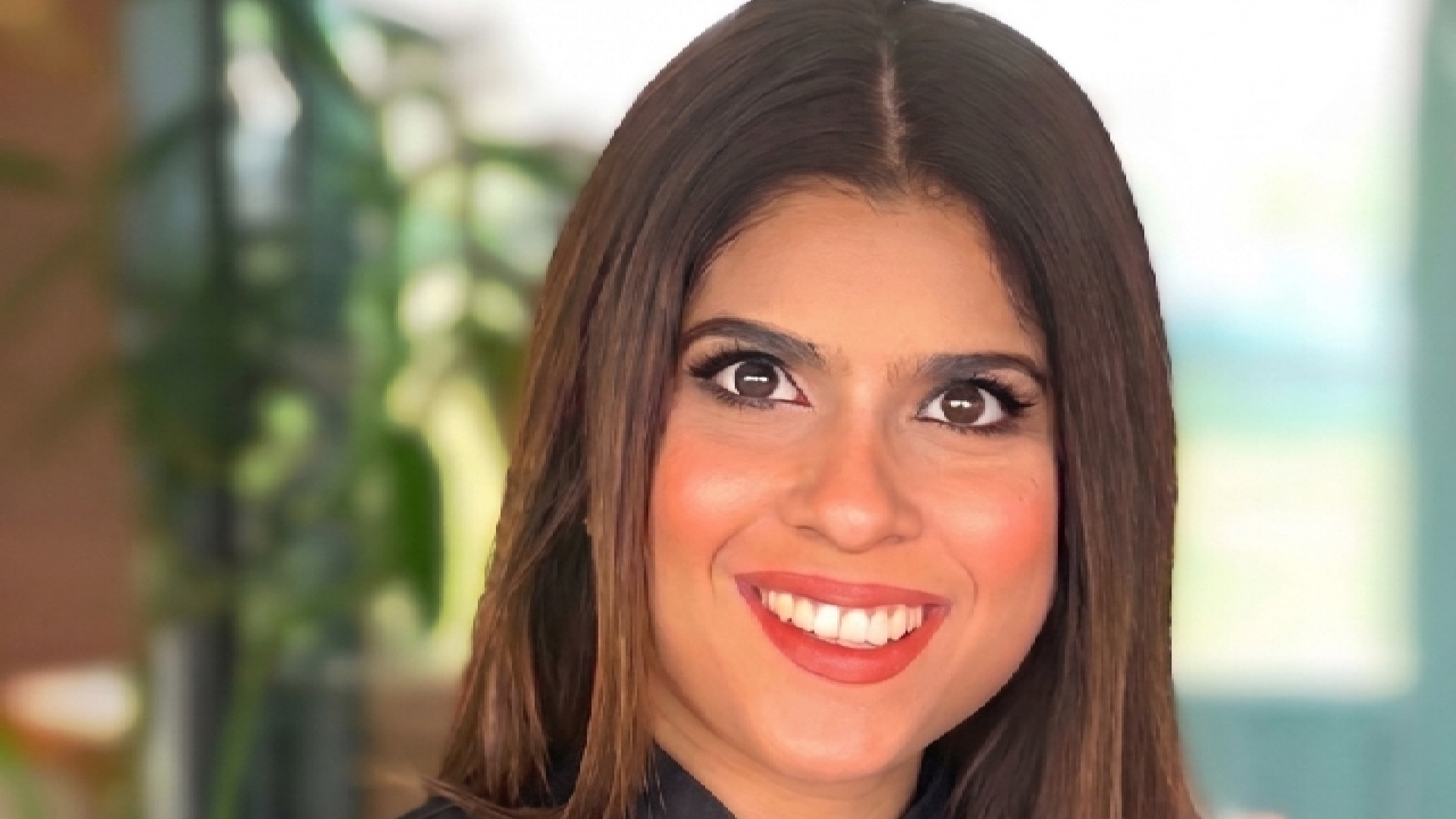

Rapelang Rabana has spent much of her career thinking about scale: how technology can serve more people, how education can produce real capability, and how African systems might be designed for African realities rather than inherited assumptions.
Best known as a South African technology entrepreneur and the founder of Rekindle Learning, Rabana has long worked at the intersection of innovation, learning, and economic participation.
What emerged in conversation with Rapelang was not startup mythology or easy AI optimism, but a disciplined argument about fundamentals. Exposure matters. Literacy matters. Infrastructure matters. Experience matters.
Stefan le Roux sat down with Rapelang for The Good Business Journal to discuss curiosity, education, technology, and the long work of building what Africa actually needs.
The Good Business Journal: You’ve spoken before about how curious you were growing up. What early experiences shaped the way you think about problem-solving?
Rapelang:
My parents worked very hard to expose us, especially through travel. We got to see different parts of Botswana and South Africa, and eventually the UK and US. That was important because it taught me very early that what you see every day is not the entirety of the world.
I remember ordering a small pizza in the US that was bigger than the large pizza at home and thinking, “Is this a parallel universe?” It sounds silly, but it teaches you that people genuinely have very different experiences of reality.
Travel helped cement that, and so did reading. I read constantly as a child. I was always interested in how other people lived and what they imagined for their own lives.
Stefan le Roux: How do you make those types of experiences more accessible?
Rapelang:
The kinds of opportunities I had to travel are not accessible to everyone, but I think it would be useful to widen the definition there. There are plenty of South Africans who haven’t even taken a bus to another city, and that too can be horizon-expanding, and it’s a very achievable goal for most. Any experience that gets you out of your immediate suburb is part of exploration.
What really shapes mindsets and behaviour isn’t just content, it’s experience. Looking back, I can see that my teachers and coaches were constantly stretching me, giving me harder things to do, keeping me just outside my comfort zone. That is a huge part of how people develop resilience and capability.
That’s why I think so much about what happens in the absence of those kinds of experiences. For millions of young people, they simply haven’t had them. This is where technology becomes exciting to me.
Virtual reality and AI can help dematerialise certain experiences: practising for a job interview, learning how to operate in a mine, preparing for nursing or technical work. For Africa, the challenge is not just what young people learn, but how we expose them to the kinds of learning experiences that build confidence and competence. Content alone is never going to be enough.
Stefan le Roux: What sits at the centre of your work now?
Rapelang:
The two things I’ve always cared about are education and skills, and then innovation more broadly. On the education side, if Africa is ever going to take its place as a serious global player, we have to unlock the potential in young people at scale. I care about that deeply because I don’t want the continent to sit at the bottom of the economic rung forever.
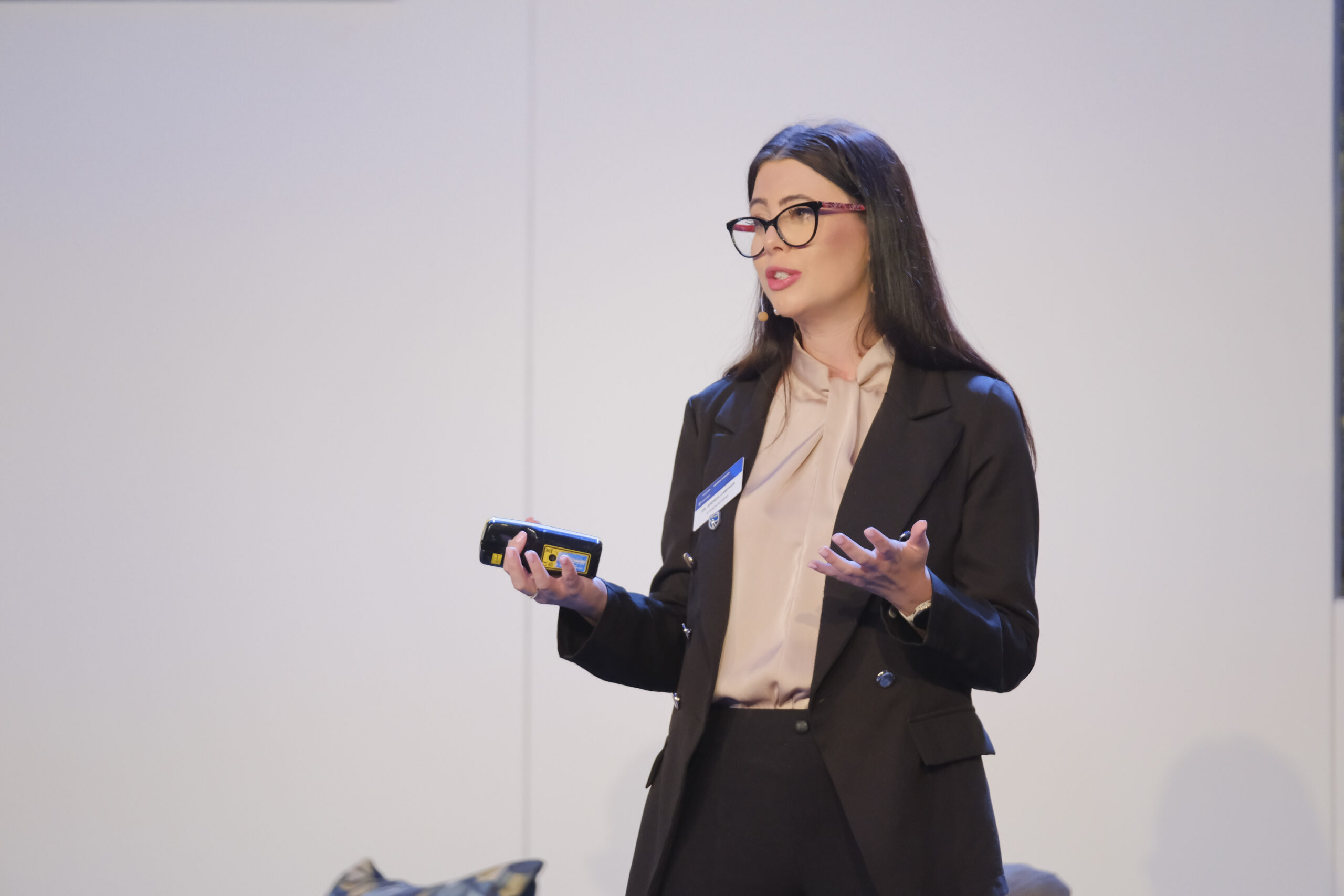
On the technology side, most problems are easy to solve for 10 or 100 people. But once you need to solve them for millions, you need a lever for scale. That’s what technology offers. Almost every serious challenge we face, whether in health, education, agriculture, or infrastructure, has to be solved materially and at scale.
Stefan le Roux: People in your space often speak about African problems and African solutions. What does that mean to you?
Rapelang:
Technology is most powerful when it is applied to lived problems in your lived experience. African solutions to African problems means deciding that the challenges in our own environment are worth solving, then building for them with seriousness.
Americans have been very good at that. They take something from their own lived reality, decide it matters, and build businesses around it. I could never have built Airbnb. It was never plausible in my psyche to put a guest on a mattress in my lounge.
My relatives would have disowned me. But it was plausible in someone else’s world, so software got built around that worldview, and eventually the rest of the world was persuaded to adapt.
We don’t do that enough for our own realities. There’s an entire industry around wine, complete with labels, apps, and vocabulary for describing taste. But there’s no equivalent sophistication in something like black hair, even though that is also a massive industry with real needs.
That tells you something. Someone decided wine was important enough to organise, describe, and build around. We have to do the same with our own problems. First, we have to value ourselves enough to believe those problems are worth solving.
Stefan le Roux: There’s a lot of optimism around AI, but also a lot of concern. Is it going to help Africa, or widen the gap?
Rapelang:
As things stand, it won’t automatically lead to inclusivity. AI sits downstream from more basic problems. If people cannot access devices affordably, if access to the internet remains expensive, and if they cannot participate meaningfully in the digital economy, then AI simply accelerates inequality.
And participation isn’t just communication. It’s whether you can process payments, buy and sell goods and services, and actually function economically online.
Then there’s language. Language is core infrastructure. If we are not building models that work in African languages, including for children who are still pre-literate, then we are designing exclusion into the future.
The other major issue is connectivity. If tools can’t work offline or on-device, we will continue to exclude huge numbers of people within the African context. That is especially clear in education.
We have spent years assuming internet access would simply improve enough to make Western-style synchronous learning viable in African classrooms. I don’t think that is realistic at scale any time soon. We need systems that are fit for context, not systems built on wishful thinking.
Stefan le Roux: What concerns you most about education and workforce readiness in South Africa?
Rapelang:
Our foundations are still weak. Literacy and numeracy gaps remain profound, and adding glossy things like coding and robotics does not fix that. In some cases, it just diverts attention and resources from the fundamentals.
If logic and analytical thinking are not developed, it doesn’t matter what great AI tool you put next to someone. If you don’t get the foundations right, you lose even the option of using those tools well.

The other problem is that education still overestimates content. We define what must be learned and assume that enough content will produce competence. But content is not learning. How you learn matters more than what is placed in front of you.
I remember having an excellent squash coach at school. She would watch each student carefully, see where the gap was, and then curate the next exercise or matchup to force improvement.
That is what great coaching looks like. It is responsive. It is experiential. It is developmental. Too much of education still treats teaching as telling, instead of creating the conditions for growth.
Stefan le Roux: South Africa also has one of the highest youth unemployment rates in the world. What can be done for people who are already outside the educational pipeline?
Rapelang:
It’s one of the great tragedies of our time. And part of the problem is coordination. South Africa is not a country without resources, but we have struggled to align policy, industry, education, and demand.
A more coordinated response would say: this is the sector we are going to build, this is what we are going to manufacture, this is the talent we will need, and this is how universities, colleges, and training systems will prepare people for it.
For those who are already outside the traditional system, I come back to dematerialised learning experiences. Most people do not need a broad mastery of everything to begin generating income. They need to become very good at a narrower set of tasks.
If technology can create repeatable, practice-rich environments where people can rehearse a skill until they become highly competent, then it can open real pathways to work.
Stefan le Roux: What would you say to a young entrepreneur trying to build something meaningful today?
Rapelang:
Focus your time and attention on something you genuinely care about, something you would still want to learn about even if nobody were paying you. When things go badly, and at some point they will, that is what keeps you going.
And then become a master at something. There is no reason today that you cannot become a genuine expert in a category. The knowledge is there. You can learn from books, from people who have already done it, from the internet, and from tools like ChatGPT. But you have to bed down. You have to go deep.
A funny thing happens once you become excellent at one thing: people start to trust that you can do other things too. But if you never become truly good at anything, you can spend a very long time wandering in the middle.
Rapelang’s worldview is demanding in the best sense. She is impatient with hype, deeply alert to structural reality, and unwilling to confuse novelty with progress. Again and again, she returns to the same core idea: real advancement begins long before the shiny layer. It begins with exposure, with foundational capability, with systems designed for actual conditions, and with the confidence to take local problems seriously.
That may be the most compelling thing about her perspective. It refuses both fatalism and fantasy. Africa does not need more borrowed language about innovation. It needs the courage to build for the Africa that exists, and the discipline to keep building until that reality matches its potential.