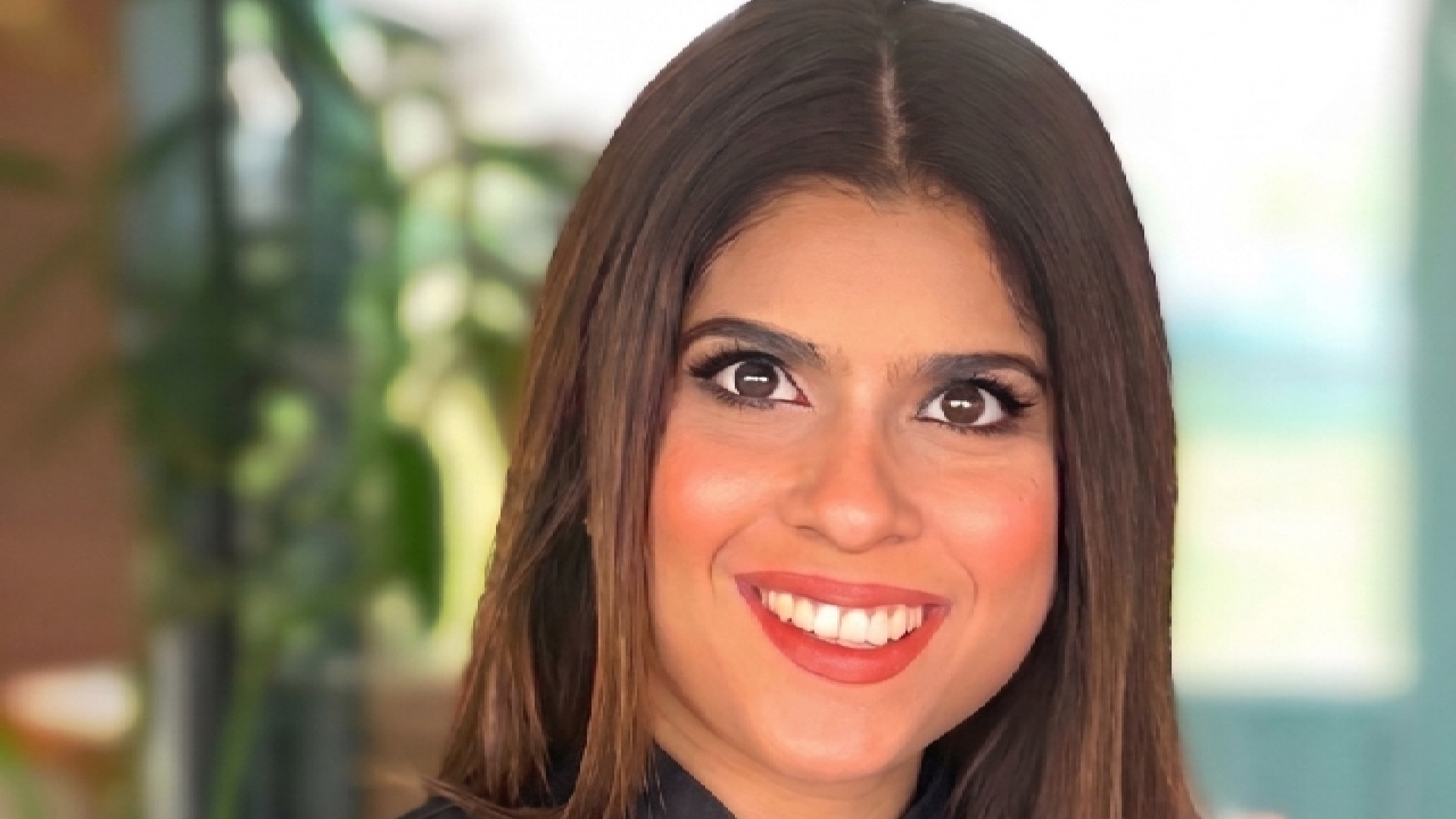
Raised in Benoni in a family that had built its own success from very little, Dr Lershania Moothsamy grew up with a particular understanding of privilege. Wealth, in her home, was never treated as an end in itself. It was a vehicle to care for family and then extend that care into the community.
That ethic has followed her into medicine and now into SPHER3, the non-profit company she co-founded at the intersection of health, environment, research and community development.
Stefan le Roux sat down with Dr Moothsamy to discuss medicine, public health, and why she believes Africa already has the solutions it is too often taught to seek elsewhere.
The Good Business Journal: Tell us about your upbringing and how it shaped you?
Lershania:
I was very lucky. By virtue of being born into my family, I was afforded a lot of opportunities.
My parents did not complete university. My dad barely finished high school. He had to leave school and start working to support his family, and later started his own business. Through that, he gave us opportunities that other people did not necessarily have.
Growing up, I grappled with that reality. It was a question I would always ask my parents: why do we have so much and other people don’t?
Something that was constantly echoed in our household was that we should work hard and study so that we could make the world a better place for the people who did not have the same access.
My parents are very philanthropic people, so wealth was never something that was just for ourselves. First, take care of yourself and your family, but then take care of your community and empower the people around you. The legacy you leave is not built only on what you achieved. It is built on how what you achieved helped others achieve what they needed to.
Stefan: Why did you choose medicine?
Lershania:
I was quite academically talented at school, and as an academically talented Indian daughter, your options are engineering, law or medicine.
The earliest memory I have is from Grade 3. We had a career day at primary school, and everyone dressed up as astronauts or rock stars. I was there with my little stethoscope and white coat, saying I wanted to be a cardiothoracic surgeon. I do not even think I knew what that meant at the time, but it looked like a career that would allow me to achieve my goals every day.
For me, that goal was empowering people when they are at their most vulnerable.
I did not get into medicine on my first try. I studied occupational therapy for a year, and then transferred into medicine at the University of Cape Town. That first year changed the way I now interact with all other health professionals, and I genuinely believe I am a better doctor today because I spent that year in occupational therapy.
Stefan: When did SPHER3 begin to take shape?
Lershania:
I went into medical school knowing that my end goal was to start a health NPC. That was the reason I went into medicine.
In my final year, I sat down with my father and he said to me: “Lershania, you are becoming one of those people who talk about doing something, but do not actually do it.”
In my fifth year of medical school, I met two visionary women who would become my co-founders at SPHER3: Dr Puni Mamdoo, an associate professor of public health, and Deidre Clemens, a pharmaceutical specialist with more than 20 years of experience in the industry. They echoed the same sentiments I had about wanting to create a platform for sustainable healthcare change.
SPHER3 stands for Society, Public Health, Environment, and Research, Reach and Responsibility. We knew that health does not exist in a vacuum. It exists within a context, and you have to address those contextual factors if you want to make sustainable change.
Stefan: What does SPHER3 actually do?
Lershania:
We do whatever the community needs.
Our work is very data-driven, because we know that data allows us to have more leverage when it comes to partnering with bigger institutions. Our approach is to go into lower-income communities, recruit and employ people from those communities, with a focus on, but not limited to, women, and then train them in-house as community healthcare workers.
They undergo rigorous training overseen by myself and our public health specialist. The course trains them in health education and in the signs and symptoms of non-communicable diseases, mainly diabetes, hypertension, high cholesterol and asthma. It also covers lifestyle risk factors like smoking and harmful alcohol use.
Our basic suite of services is prevention, early diagnosis and prompt treatment, but beyond that we look at the specific healthcare needs of a community and build the response around that.
Stefan: From your perspective, what is the most pressing issue in healthcare in South Africa?
Lershania:
Non-communicable diseases because they are silent killers. I work in the public healthcare sector, and you see people coming in at three o’clock in the morning with issues that could have been sorted out at the clinic level.
It is this way because our primary healthcare is not well equipped. We are investing so much in new CT scanners and MRI scanners at the tertiary level, and looking for super-specialist doctors, when we actually need people at the grassroots level to prevent these issues from happening in the first place.
If you prevent someone from getting diabetes in the first place, they are able to contribute much more effectively to the economy for a longer period of time.
The cost is far reduced compared to dealing with a patient who now needs an amputation, becomes septic, needs multiple revisions, and takes up resources that can only be provided at a secondary or tertiary hospital.
Stefan: How does the community healthcare worker model function practically?
Lershania:
The healthcare workers go into the community on foot and collect health data from each member in each household. They bring that back to us, and we synthesise it to understand the specific healthcare needs of that community.
When we say community, we mean a town-based model. We do geographical mapping and assign each community healthcare worker to a catchment area. On the West Coast, for example, we have worked across towns such as St Helena Bay, Saldanha Bay, and Langebaan.
Above our basic suite of services, we then respond to the particular needs of that community. In Saldanha Bay, which is highly industrialised, there was a high prevalence of respiratory illness because of poor air quality. So we planted 6,000 spekboom trees, and when we retested the air quality a few months later, there was a significant improvement.
That is the point. We are not just treating respiratory disease. We are asking why people are getting sick in the first place.
Stefan: You are also piloting a home-based care project in Chatsworth. What need are you responding to there?
Lershania:
In Chatsworth, we found that the major health gap was not health education in the same way. It was end-of-life and home-based care.
We are training community members as home-based carers. They will be able to go into homes and provide basic wound care for chronic and acute wounds, assist with mobilisation for bed-bound patients, and provide support for elderly people and people who are differently abled and unable to get to the clinic.
Care will come to the home. That improves adherence, and that improves health outcomes.
Stefan: South Africa has a severe youth unemployment problem. Does SPHER3 see itself as part of that conversation too?
Lershania:
Absolutely.
We are a health NGO, but health exists within a context. Employment and household income are key factors in the health outcomes of a household.
Through SPHER3, we are empowering people through skills acquisition and employment opportunities. Our community healthcare workers are paid for the services they provide. The course is currently in the process of being accredited, and once that is complete, people will have access to a free accredited course that they can use for future employment opportunities, including beyond SPHER3.
So yes, it is about healthcare, but it is also about skills acquisition and real employment pathways.
Stefan: Many people are sceptical of NGOs because they worry about where donations actually go. How do you think about quality and accountability?
Lershania:
I think the problem with conventional NPCs is that they get funding and a large portion of it goes to administrative fees, while a smaller portion goes to the service being provided.
At present, 100% of donations to SPHER3 go to the service. As directors, we cover our costs individually. We do not use donated money to cover flights, petrol, or accommodation.
We are also very transparent with our financials. Anyone who wants to donate should be able to ask to see our books, and we must be able to say exactly what came in, what went out and what it was spent on.
Just because someone is not paying for a service, or is paying less than an affluent person, does not mean that the service should be of lesser quality.
Stefan: How do you define success for the next five years?
Lershania:
If you had asked me a year ago, I had a very concrete vision. After two years of working in the public healthcare system, I am less concrete in that vision, but I am still concrete in the outcomes.
I still want to practise clinical medicine, but I do not think I will practise it in the conventional way. My work with SPHER3 has given me a different view of what meaningful work in medicine looks like. SPHER3 is the sweet spot of medicine, humanity and art.
In the next five years, I see myself scaling SPHER3 across the continent. The ultimate goal would be to consult for an organisation like the World Health Organisation or the United Nations, where I can have a tangible influence on systems change rather than only individual patient management.
Stefan: What gives you hope for South Africa and the continent?
Lershania:
I am a very patriotic person. And not only for my country, but for my continent.
As Africans, we have the solutions. We have the capacity. But we have a culture where we are scared of showing that to the world, because it looks boastful or arrogant.
We need to stop having a begging mindset. We need to shift our mindset and say: we are capable, we have the solutions, and we are not going to the West to ask for solutions anymore.
Instead of fleeing from a beautiful country and a beautiful continent that has so much to offer, let us stay where our roots are and find ways to make it better. We are responsible for the trajectory and future of our continent, and it is time we start seeing it that way.
Dr Lershania Moothsamy’s work feels inseparable from the values she inherited. In SPHER3, that character finds an outlet. The result is a model of care shaped as much by conscience as by clinical training, and a young doctor trying, in a very practical way, to leave the world better than she found it.