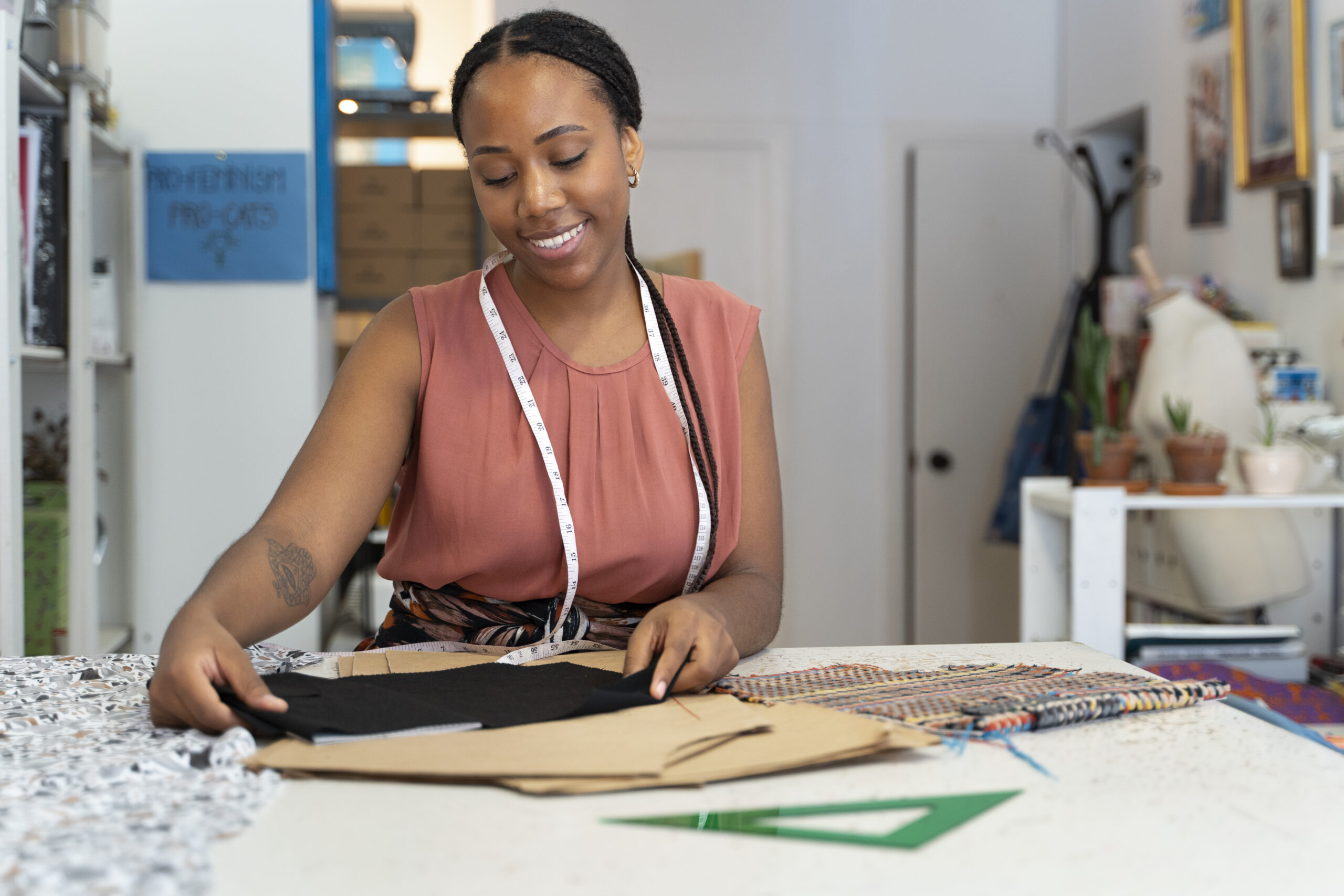

Starting a business in South Africa is rarely easy. For many women, the barriers are real: limited capital, uneven access, and the pressure of building around work, family and daily life.
These business ideas for women are intended as a practical starting point for you to get the ball rolling in the right direction, with a few examples of South African women who have built in these sectors. Here are 20 business ideas, across five categories, to help you start thinking about what might suit your skills, interests and circumstances.
Key takeaways
- The best business ideas for women are usually the ones that match your skills, your available capital and the kind of work you can realistically sustain.
- Some of the strongest low-cost options are service businesses such as tutoring, admin support, social media management and cleaning services, because they can often be started from home with very little overhead.
- Product businesses can take more money and coordination to get off the ground, but they are often easier to scale once the offer is clear and repeat demand is there.
- Many small business ideas for women in South Africa become more viable when they solve a specific local problem rather than trying to appeal to everyone.
- The women featured throughout this article show that you do not need the perfect idea to begin. You need a clear offer, consistent execution and a first customer.
Join the GBJ Inner CircleSome conversations belong in print. Others belong in a room. GBJ is building a private community of South African founders, executives, and business leaders. When we gather, you will know first. No noise. No newsletters. Just the conversations that matter, when they happen. [Get Early Access — Join the GBJ Inner Circle] |
Low-cost service business ideas for women in South Africa
Most of these can be started for roughly R0 to R5,000.
1. Mobile beauty and personal care
Hair, nails, lashes, skincare and mobile treatments can start small and grow through repeat trust. Ameerah Mahomed shows how beauty can begin with service and flourish into a successful product business.
2. Cleaning and domestic services
This works in homes, offices, guesthouses and short-term rentals where reliability matters more than marketing jargon. The real opportunity is supervision, consistency and trust: building a service clients do not have to manage every day.
3. Event planning and coordination
South Africa is a country of gatherings: weddings, launches, church events, memorials and brand activations. Vicky Wentzel and Pearl Erasmus show how coordination, speed and calm under pressure can become serious commercial value.
4. Virtual assistant or admin support
Many small businesses need help with inboxes, quotes, bookings, invoicing and follow-ups. This is one of the clearest business ideas for women at home because it can begin with a laptop, data, structure and the discipline to make someone else’s business run better.
5. Tutoring or skills coaching
A tutoring business can start with one subject, one age group or one clear outcome. Devina Kowlas shows how teaching can grow beyond the classroom into entrepreneurship, leadership and a wider public role.
Product Businesses
Startup costs usually sit between roughly R1,000 and R20,000, depending on production.
6. Artisan food or specialty beverages
A strong food business can begin with one excellent product: sauces, baked goods, preserves, catering packs or a niche drink. Apiwe Nxusani-Mawela built in one of the hardest product categories of all and proves there is room for technical, differentiated brands.
7. Handmade or craft products
Candles, skincare, jewellery, gifting and home fragrance can work when the product is repeatable, not just attractive. Ameerah Mahomed’s business is a useful reminder that packaging, reinvestment and quality control matter just as much as the original idea.
8. Clothing and fashion design
Fashion businesses tend to work best when they solve for a specific customer: occasionwear, uniforms, alterations, modestwear or small-batch design. In South Africa, where fit, service and identity matter, a focused fashion offer can grow through reputation before scale.
9. Children’s products or educational materials
Parents, teachers and caregivers are always looking for practical tools that help children learn, read and build confidence. The demand sits close to the educational spaces leaders like Rita Govender and Devina Kowlas understand deeply.
10. Upcycled or sustainable homeware
Upcycled décor, restored furniture and useful products made from waste can work when the item is desirable first and sustainable second. The opportunity is not to sell virtue. It is to sell something well made, well priced and worth bringing into a home.
Creative and Digital Businesses
Most of these are very low-cost to start, often between R0 and R2,000.
11. Social media management and content creation
Small businesses know they need visibility but often do not know what to post or how to stay consistent. Rita Govender speaks to the digital fluency and future-facing confidence this kind of work increasingly requires.
12. Graphic design and visual branding
Logos, menus, pitch decks, packaging, social templates and business profiles all sit inside this category. For many small businesses, design is not just about appearance. It helps a business look credible, communicate clearly and earn trust.
13. Photography and videography
Restaurants, schools, professionals, products and live events all need clean visual assets. The opportunity is not simply owning equipment. It is helping people and businesses present themselves well enough to be taken seriously online.
14. Copywriting and editorial services
Many founders know what they do but struggle to explain it clearly. Website copy, articles, bios, campaign messaging and proofreading can become a real business for someone with language discipline. Paula Fray is a strong figure in the South African media landscape, and the Fraymedia Foundation could be a valuable place to learn and develop for someone interested in journalism.
15. Online course creation
A useful skill can become a workshop, cohort programme, downloadable guide or recorded course. The strongest offers solve one specific problem for one specific learner, rather than trying to teach everything to everyone.
Tech and Education Businesses
Costs vary widely here: some ideas are lean to start, while others need real technical investment.
16. Online tutoring or e-learning platforms
South African demand for accessible learning is deep, especially where geography, transport and school quality vary so widely. Entrepreneurs such as Devina Kowlas and Rita Govender show that education businesses can expand beyond one classroom into scalable delivery.
17. Tech support or IT services for SMEs
Small businesses need help with devices, email, cloud storage, payment links, websites and basic cybersecurity. Yashmita Bhana is a useful reminder that technical businesses are often built not just on skill, but on resilience, adaptability and the willingness to keep rebuilding.
18. App or software development
This becomes powerful when it solves a practical problem: logistics, education, booking, township commerce or payments. South Africa does not need more abstract tech. It needs tools that remove friction for real people and real businesses.
19. Digital marketing consulting
Many SMEs need more than posting help. They need strategy around customer acquisition, offers, content, basic funnels and measurement. This is especially valuable for businesses that are good operationally but weak in visibility.
20. EdTech or skills development
Skills businesses sit close to one of the country’s biggest needs: making people more employable and more adaptable. Rita Govender’s work is a strong example of how education, digital confidence and economic relevance can meet in one business.
Social Impact and Community-led Business Angles
These are not extra ideas so much as high-potential ways to frame four of the opportunities above.
- Tutoring for under-resourced communities can be commercially viable while serving learners who need support most.
- A cleaning or care business that creates work for township women turns a basic service into a stronger local model.
- Digital marketing for local SMEs and informal traders helps good businesses become easier to find.
- Wellness, coaching or care-led services can become purpose-driven businesses when handled with the kind of grounded service visible in Nazeema Tierney.
Which Sectors Look Most Promising Right Now?
No growth signal can tell you which business will succeed. A strong sector can still be a poor fit for the wrong founder, while a slower category can work beautifully when the concept is clear and the execution is disciplined. Still, the broad South African data does point to a few areas with stronger tailwinds than others.
Digital and business services
Virtual assistant work, social media management, digital marketing, graphic design and SME tech support all sit inside this category. The reason is simple: finance, real estate and business services grew by 0.9% in Q1 2026, and small firms still need visibility, operational support and back-office help.
Product businesses
Beauty, fashion, children’s products and specialist consumer goods tend to work best when the product is distinctive, intentionally branded and built around repeat customers rather than broad mass appeal. There is some evidence of growing demand in adjacent retail categories too: overall retail trade sales increased by 4.2% higher in January 2026 than in January 2025, with textiles, clothing, footwear and leather goods up 9.9% and contributing 1.6 percentage points to that increase.

Education and skills businesses
Tutoring, coaching, online learning and skills development sit close to one of South Africa’s most urgent needs: employability. That does not make the work easy, but it does mean the demand is structural rather than short term. Stats SA’s personal services data shows that education services accounted for 21.2% of total industry income and 31.2% of employment in 2023, which helps explain why education remains such a substantial and labour-intensive category.
Food, hospitality and event-adjacent businesses
Demand is there, especially in accommodation, food and gatherings, but margins can be thin and location matters. Recent tourist accommodation, where total income rose 12.1% in March 2026 compared with March 2025 and income from accommodation alone rose 14.1%, and food and beverages, where seasonally adjusted income rose 1.1% in March 2026 compared with February 2026 releases both point to improving activity.
Software and app development
The market direction is encouraging, particularly where digital tools solve real operational problems, but for most first-time founders it is usually the least accessible entry point.
What These Businesses Have in Common
Across every category on this list, the pattern is similar. The women who build well tend to start with what they have, build trust before they scale, and learn quickly from real customers. They do not wait for perfect conditions. What GBJ has seen across these stories is that the idea matters less than the execution.
A first paying client, a repeat order, a strong referral and a reputation for delivery often matter more than a business plan that never leaves the notebook.
Resources and Next Steps
If one of these ideas feels possible, the next step is understanding how to start properly. You can explore more stories of South African women in business on the GBJ Stories hub while you shape your own starting point. You can also read our guide to starting a business in South Africa and our SEDFA funding guide for more practical next steps.
FAQ
What business can a woman start with no money in South Africa?
Service businesses are usually the easiest place to start with very little capital. Tutoring, admin support, social media management, cleaning coordination and copywriting can often begin with existing skills, a phone and a small network.
What is the most profitable business for a woman in South Africa?
Service businesses usually have higher margins, while product businesses are often easier to scale and can have higher net-profit potential. In practice, that means tutoring, virtual assistant work, copywriting, consulting and digital support can be stronger on margin because the overhead is low. A well-run beauty brand or specialised product business, on the other hand, may carry more costs but still produce more money overall once demand and repeat sales are there.
How do I register a small business as a woman in South Africa?
You can register a business in South Africa through CIPC, either directly on the CIPC platform or via BizPortal. Please see our guide to registering a business in South Africa for more information.
Are there government grants for women starting a business in South Africa?
Yes, there are government and development funding opportunities for women-owned businesses in South Africa. A practical place to start is with the official channels: SEDFA if you are looking for both finance and business development support through the merged agency. and SheTradesZA if you want access to opportunities, buyers, investors and networks designed to support women in business. Before applying anywhere, make sure your registration, tax and compliance documents are in order, and treat funding as support for a viable business rather than the starting point of one.
Stay Connected With GBJThe business landscape is always changing, and the best opportunities often come through the right conversations. Follow GBJ for practical insights, expert perspectives, and updates on the issues shaping South African businesses. When new events, discussions, and networking opportunities become available, you’ll be among the first to know. [Get Early Access — Join the GBJ Inner Circle] |