A personal reflection on women’s empowerment in South Africa, Charlotte Maxeke, the care economy and why women must not arrive late to the age of artificial intelligence.
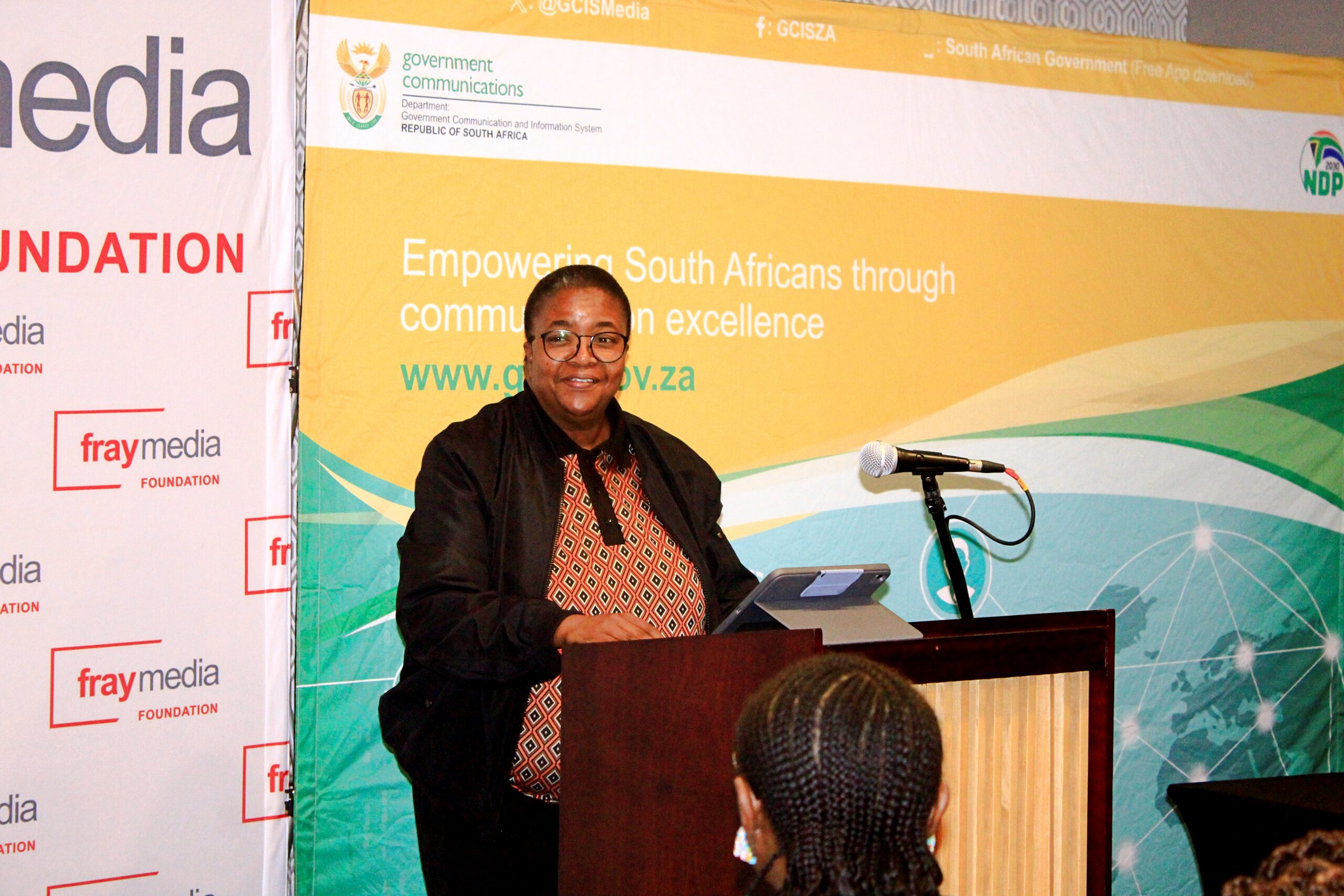
There is a book in my home about Charlotte Maxeke: Beauty of the Heart: The Life and Times of Charlotte Mannya Maxeke. Perhaps that is why, when Deputy Minister Mmapaseka Steve Letsike began speaking at the fraymedia Foundation’s Rise & Shine Women in Media Breakfast Series in Johannesburg, hosted by the fraymedia Foundation and the Government Communication and Information System, I found myself listening differently.
Charlotte Maxeke is one of those historical figures whose name I have known for years. But another connection makes her story feel familiar to me. She was closely connected to the African Methodist Episcopal Church, the AME. My mother belongs to the same church.
Long before Maxeke became one of the women whose work would alter the political life of South Africa, she travelled abroad as part of a choir. When the choir became stranded in the United States, she remained there and studied at Wilberforce University, an institution connected to the AME Church.
She returned to South Africa educated, politically conscious and prepared to organise.
History remembers what happened next.
Sitting in that room more than a century later, I began thinking about inheritance. Not as something we receive and admire, but as something we are expected to do something with.
Deputy Minister Letsike gave us a useful way to think about the year in which South Africa finds itself.
Three important anniversaries converge in 2026. Seventy years have passed since the Women’s March of 1956, 50 years since the youth uprising of 1976, and 30 years since South Africa adopted its Constitution in 1996.
She described them as “three clocks of freedom ticking inside the same unfinished democratic project”.
That stayed with me.
The 1956 Women’s March asks what became of the freedom women organised for. The young people of 1976 ask what our generation is prepared to confront. And the Constitution asks whether the freedoms written into law can actually be experienced in ordinary life.
These are not abstract anniversaries. They are an uncomfortable measurement of where we are.
The Deputy Minister also challenged us not to fall into either of two traps: pretending democracy has delivered nothing, or pretending what democracy has delivered is enough.
That distinction matters.
South Africa has changed. Women have rights and opportunities that previous generations fought extraordinarily hard to secure.
But having a woman in the room is not the same as giving her power in it.
Visibility Is Not Power
We have become comfortable celebrating firsts.
The first woman in a position. The first to achieve something. The first to break a particular ceiling.
Do not get me wrong. Those achievements matter.
But what happens after she enters the room?
Mbokodo?
We have spent decades praising South African women as rocks. Strong. Resilient. Able to carry families, workplaces and communities.
But at what point does celebrating a woman’s ability to carry everything become an excuse for never asking who is helping her carry it?
The Deputy Minister put it more succinctly: we need to move from visibility to ownership.
That statement is becoming more urgent.
One of the uncomfortable issues she raised was the care economy.
Our mothers.
The mothers who wake up in the morning and prepare everyone else for their day. The mothers who leave their own homes to care for another family as domestic workers. The mothers working at crèches. The mothers caring for older people, children and communities in one way or another.
Often, that work is unpaid, underpaid or rewarded with a pittance compared with what it is actually worth.
Where does the duty lie?
We ask why women disappear from industries midway through their careers as though it is some mysterious phenomenon.
Sometimes the explanation is considerably less complicated.
The system was never designed around the full reality of their lives.
But Technology Will Fix All of That. Or Will It?
I entered journalism in a very different media environment. That world is disappearing. I cannot imagine what the equivalent transformation looks like in every other industry.
And now there is artificial intelligence.
Sitting in that room, I realised that the women of my generation are being asked to prepare the next generation for an information economy that we ourselves are still learning to navigate.

We have experience. But expertise is no longer a destination.
If women do not understand this technology, we risk repeating something history has done to us many times before: arriving after the infrastructure has already been built, the ownership has already been decided and the rules have already been written.
It was at this point that the Deputy Minister rejected the idea that women do not have the skills required for the time we face.
We do.
But we have to train and retrain. Technology cannot replace critical thinking.
The danger is believing that AI creates value simply because it can produce things cheaply and quickly.
It does not.
I left the event with something more than notes.
Charlotte Maxeke did not inherit a perfect South Africa. Neither did the women of 1956 or the young people of 1976. Nor did the generation that wrote our constitutional settlement.
Each generation inherited unfinished work and then added something.
In 2026, those three anniversaries sit alongside one another: 70 years since the Women’s March, 50 years since the youth uprising and 30 years since the adoption of the Constitution.
Our generation has inherited all of it.
The Deputy Minister’s question followed me out of the room: what would our generation contribute to what it had inherited?
I think I know at least part of my answer.
We must make sure that women do not arrive late to the future.
Perhaps that is what inheritance demands.
Igama lamakhosikazi malibongwe.
Further Reading
This editorial was inspired by Deputy Minister Mmapaseka Steve Letsike’s address delivered at the fraymedia Foundation Rise & Shine Women in Media Breakfast Series.
Readers who would like to explore the discussion further can access:
- Deputy Minister Mmapaseka Steve Letsike’s full keynote address (fraymedia Foundation)
https://www.fraymediafoundation.org/post/women-s-empowerment-must-move-from-visibility-to-power-says-deputy-minister-letsike
Tell Your Story With GBJ
Every week, The Good Business Journal editorial team sits down with some of South Africa’s most compelling founders, business leaders and changemakers to explore the stories behind their work.
Born from WDR Aspen, The Good Business Journal asks: How are you telling your story? Reach out and let us help you find your voice.