Bryan:
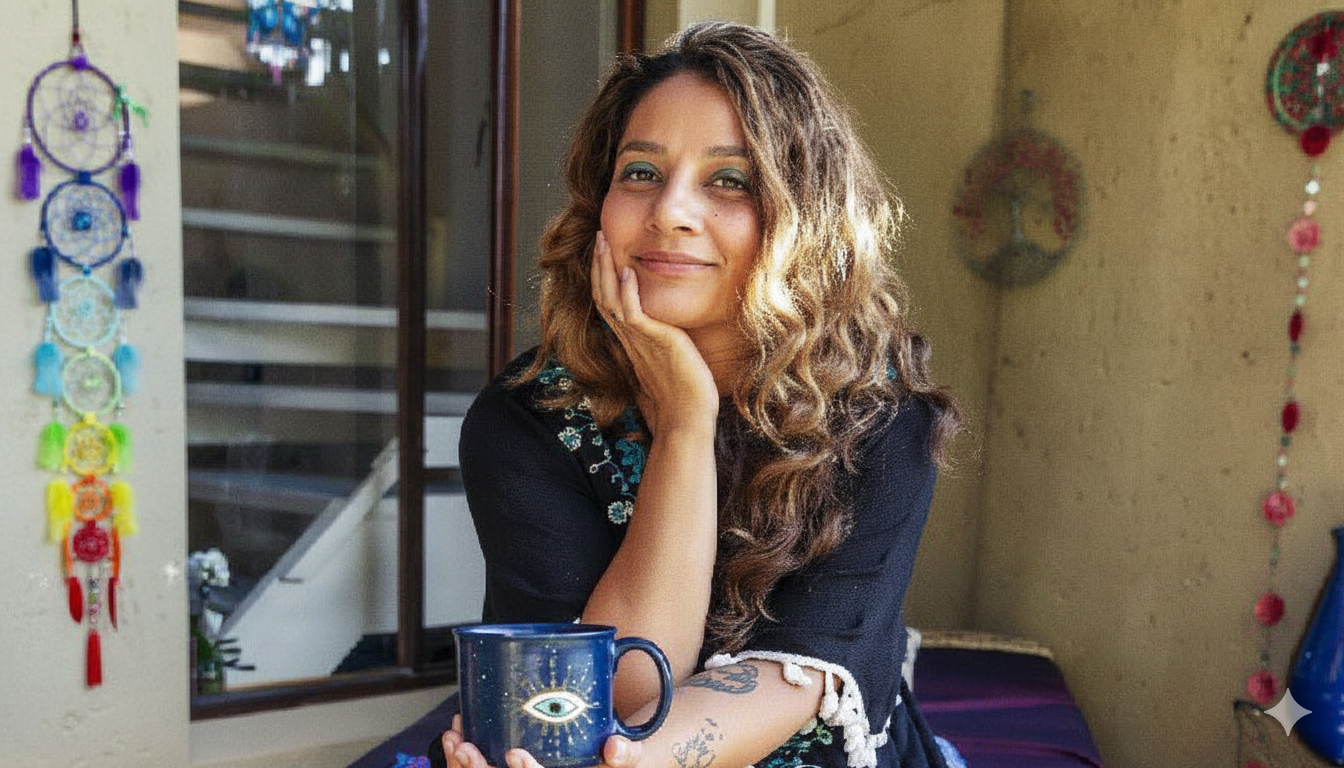
Nazeema Tierney runs her practice from home in Douglasdale, Fourways. There’s no front desk, no staff, no website—just a quiet, carefully structured rhythm built around depth rather than volume. On any given day, she sees two or three clients, leaving space between sessions because, as she puts it, “life happens.”
Before Barefoot Butterfly, Naz spent years in the corporate world—Vodacom, human resources, recruitment and sales. She did well, learned structure, discipline, and how to manage people and systems. But something never quite settled.
What followed was not a clean leap from corporate into purpose, but a far more visceral path: loss, burnout, retreat, rebuilding, grief, and ultimately, regulation. This is a story about learning when to listen—first to the body, then to life.
Stefan le Roux and Bryan Welker sit down with Naz Tierney, a Fourways-based reflexologist and founder of Barefoot Butterfly, to talk about grief, boundaries, nervous-system regulation, and why sustainability matters more than speed.
The Good Business Journal: Let’s start at the beginning. Where were you born, and how did your working life begin?
Nazeema:
I was born and schooled in Pretoria. After matric, I went straight into work. That wasn’t my plan—I thought I’d study—but the opportunity came up, and I joined Vodacom.
I started in one of the retail stores as a sales consultant. I think that’s where a lot of people get their grounding—in sales or customer service. From there, I transitioned into recruitment within Vodacom. I obtained my diploma and recruited across different client bases.
I did well, learned structure, discipline, and how to manage people and systems. But something never quite settled.
Bryan: When did you first become interested in reflexology?
Nazeema:
My first husband, who later passed away, had been in a serious car accident before we met. He was paralysed and later regained feeling, but there were still areas where the nerves hadn’t fully recovered. His family had been taught reflexology to stimulate the nerves and support healing.
When I was in high school, he introduced me to reflexology and I was fascinated. There wasn’t really much exposure to the internet back then, so whenever my mom bought a magazine and I saw something about reflexology, I’d cut it out and keep it.
Years later, while I was at Vodacom, they opened a wellness centre. One of the therapists was a reflexologist, and I went for treatments every week. I learnt that treatment by heart. And she actually said to me one day, “Nazeema, you’re going to be a reflexologist.”
That stayed with me.
Bryan: But before Barefoot Butterfly, there was a lot of life in between.
Nazeema:
Yes. I was married to my high school sweetheart, and we divorced. We were co-parenting well, but living apart. Then he passed away unexpectedly in a car accident. My two sons were very young, and I needed flexibility more than anything else.
I reached out to someone who owned a well-known sales accessory company and asked about an HR role. He said, “I can’t hire you for HR, but I can hire you in sales.” That role gave me flexibility, and I’ll always be grateful for it.
At the same time, I knew reflexology was calling me. Because of that flexibility, I enrolled to study part-time and started building my practice slowly.
Stefan: You eventually took the leap. But it didn’t go the way people like to talk about?
Nazeema:
I took the big leap when I met my second husband, Sheldon. We moved to Johannesburg in 2016, had a daughter together, and I decided this was the moment. I left corporate and went all in.
And after seven months, I went back to look for work. I had no plan. No boundaries. I wasn’t charging my worth and I was overperforming and completely burnt out. That wasn’t the way.
I went back into corporate feeling like I had failed.
Stefan: I think something a lot of solo entrepreneurs struggle with, especially those coming from a sales background where the customer is always right, is the tendency to overperform and undercharge. How did you unlearn that?
Nazeema:
I had to unlearn the belief that caring means being depleted.
I thought if I wasn’t exhausted, then I hadn’t given enough. That was a big belief to unlearn.
You can care deeply and still have boundaries. Compassion and structure can coexist.
Boundaries aren’t there to block your heart or work against the client. They’re there to protect you from overgiving and overperforming.
Bryan: After that first attempt didn’t work, how did you find your way back—and how did Barefoot Butterfly become the practice it is today?
Nazeema:
When I went back into corporate after that first attempt, I thought I’d missed my chance. But what I didn’t realise at the time was that I was being given space to learn what I hadn’t known before.
The first time, I didn’t have boundaries. I didn’t value myself properly. I didn’t have structure. I was over‑giving, under‑charging, and burning myself out. Going back to work forced me to slow down and really look at what wasn’t working.

Over time, I realised that I couldn’t seem to settle back into employment. It felt as if the universe was gently—and sometimes not so gently—guiding me back to where I was meant to be. But this time, I knew I couldn’t build the same way.
When I returned to The Barefoot Butterfly fully in 2021, I did it differently. I valued my work. I set boundaries. I made sure I was regulated first, because if I’m grounded and stable, I can truly support my clients. That’s when the practice started to flourish—not because I was doing more, but because I was finally doing it sustainably.
Bryan: The science regarding reflexology and yoga nidra is still expanding. How do you approach a discussion about your work with people who are sceptical?
Nazeema:
I’ve had many of those conversations, especially with people coming from very corporate or analytical backgrounds. For me, it’s about explaining rather than convincing.
I start by meeting people where they are. I explain that there is science behind these practices, but I also keep it very practical. I use proper intake forms, I ask medical questions, and I explain what I’m doing and why. That already helps people see that this isn’t airy‑fairy or vague—it’s grounded and intentional.
With yoga nidra specifically, I explain the nervous system and the science behind deep rest—how the body enters a theta state, where real restoration happens. I often say to people: you can sleep for eight hours and still wake up exhausted, but studies have shown that twenty minutes of doing a yoga nidra can amount to two hours of deep sleep.
I’ve also found that you don’t need to over‑explain. Sometimes all you can do is plant a seed. I’ve had many clients who were initially sceptical—often the partners who were booked by existing soulmate clients—and they come in guarded. By the end of the session, their experience speaks for itself.
I don’t try to convert anyone. I explain, I answer questions honestly, and I let the work do the talking.
Stefan: Having come from a corporate background, can you expand on the utility of taking care of yourself, physically and mentally, and the impact it can have on your productivity and well-being?
Nazeema:
Coming from corporate, I really understand the pressure, the pace, and the belief that pushing harder is the only way to be productive. I lived that. I was good at it. But what I’ve learned—both personally and through my clients—is that when your nervous system is constantly dysregulated, you’re not actually productive, you’re just surviving.
When you don’t take care of yourself, your decision‑making suffers, your patience wears thin, and you start operating from exhaustion and fear rather than clarity. I see it all the time—people who are highly capable but burnt out, reactive, and disconnected from their bodies.
Taking care of yourself isn’t a luxury or something indulgent; it’s foundational. When your nervous system is regulated, you think more clearly, you respond instead of react, and you’re able to hold boundaries. That has a direct impact on how you show up at work, how you manage people, and how sustainable your performance is.
For me, success stopped being about output and started being about peace. I don’t want my career to pull me away from my health, my children, or my relationships. I want it to support my life. And ironically, when you work from that place, your productivity improves—not because you’re forcing it, but because your body and mind are actually resourced.
Bryan: Something I’ve noticed repeatedly when speaking to highly successful people is that physical movement is non‑negotiable for them. There’s something about pushing past discomfort, reclaiming a sense of agency, and meeting a very real biological need. It feels like our bodies are hard‑wired for movement. Do you agree?
Nazeema:
Absolutely. I exercise every single day, and it’s non‑negotiable for me as well. I weight-train in the mornings to ground myself and start my day, and I make sure I walk later — I aim for around 12,000 steps.
Movement regulates my nervous system in a way nothing else can. When you move your body, you’re not just burning calories—you’re releasing stored stress, grounding yourself, and reminding your body that it’s safe. That sense of urgency you mentioned is very real.
I’ve also learned that even people who support others professionally still need support themselves.
I have a health coach who keeps me accountable, because coaches need coaches too. Eating properly, moving daily, and creating routine are foundational—especially if you’re holding space for other people.
When movement becomes part of your daily rhythm, it changes how you sleep, how you think, and how you respond to life. Strength and performance feel different when it’s built on regulation, resilience, and sustainability.
Bryan: What advice would you give someone who feels called to take a similar leap into building their own practice?
Nazeema:
The first thing I would say is: don’t rush.

I think people often feel pressure to leave corporate quickly or to have everything figured out before they start. From my experience, corporate gives you valuable skills—structure, confidence, discipline—and those things matter. Make the most of that time rather than seeing it as something you need to escape from.
Start small. Build slowly. Sustainability is far more important than speed. I’ve learned that trying to grow too fast, without boundaries or support, is what leads to burnout.
If your nervous system isn’t regulated, you’re operating from survival. You might look productive on the outside, but internally, you’re exhausted and reactive.
When you’re grounded and regulated, you make clearer decisions, you value your work properly, and you’re able to create something that actually supports your life instead of draining it.
In short, build your nervous system before you build your brand.
Bryan: Can you name one practical tool that a reader can use to build their nervous system?
Nazeema:
Without a doubt, yoga nidra.
I discovered yoga nidra at a time when my nervous system was completely overwhelmed. I remember attending a workshop and experiencing a level of rest that I hadn’t felt in years. It wasn’t just relaxation—it felt like my body finally knew how to switch off properly.
It’s practical, accessible, and gentle. You don’t need any equipment or prior experience. You just need to lie down and allow your body to rest. For me, yoga nidra became the foundation that allowed everything else—my healing, my work, and my life—to stabilise.
Bryan: In 2024, your second husband passed away by suicide. How did that change you?
Nazeema:
It was sudden, shocking, and deeply heartbreaking. It changed everything. I knew he was battling things, but it still rocked my foundation. He was my big love, and what we shared was deeply meaningful—not just to me, but to our family as a whole.
My immediate focus was on my daughter and my boys. My two sons from my previous marriage took him as their father—they called him dad—so I went straight into mom mode. Everything became about creating stability for my kids, making sure they were supported, back in routine, and moving forward.
What I became very aware of is that they were watching me. I realised that if I wanted them to move forward, I had to lead by example. I couldn’t tell them to go to therapy if I wasn’t doing the work myself. I couldn’t tell them to exercise if I wasn’t. I couldn’t tell them to live again if I wasn’t willing to do that too.
As I started working again, they started working again. When I moved my body, they went back to the gym. When I booked a small getaway and allowed myself to leave the house again, they began travelling and making plans too. It was never something I told them to do—it happened naturally as they watched me take those steps. And we have had many open heart felt conversations and still do.
Once I saw that my children were stable—going to gym, back into routine, finding their own support systems—that’s when my own emotions surfaced. That’s when my grief really began.
Grief teaches you things you can’t learn any other way. And in a scenario like this one, it comes with the added burden of having to forgive the person you are grieving as well, and I am glad to say that I got there. I don’t see forgiveness as condoning. For me, forgiveness is asking whether there has been wisdom, growth, or meaning that emerged from the pain.
I wouldn’t wish this journey on anyone. But it has allowed me to hold space for others walking the same path—not from theory, but from lived experience.
Stefan: To close: what do you believe is South Africa’s greatest quality?
Nazeema:
Every country has problems. But when I think of South Africa, I think of a rainbow and not just in the sense that we are the Rainbow Nation. A rainbow is colourful, expressive, and warm. We find humour even in hard moments.
There are storms everywhere. But South Africans have the unique ability to see the rainbow during the storm.
Bryan:
Nazeema Tierney’s story is not one of sudden reinvention, but of careful listening—to the body, to grief, and to the quieter signals that often get drowned out by pressure and pace. Through The Barefoot Butterfly, she has built her heart’s work that reflects what she believes: that regulation comes before productivity, that boundaries make compassion sustainable, and that success means a life that feels steady rather than strained.
In a culture obsessed with speed and scale, her story reminds us that physical and mental health are not luxuries—they are the foundation on which meaningful, enduring work is built.
Every week, The GBJ editorial team sits down with some of South Africa’s best. With a tenacity and spirit that can create success out of nothing more than a glimmer of hope, we believe South African businesses deserve a platform to tell their stories.
Born from WDR Aspen, The GBJ wants to ask you: how are you telling your story? Reach out and let us help you with your voice.
If you or someone you know is struggling with thoughts of suicide or emotional distress, support is available. The South African Depression and Anxiety Group (SADAG) can be reached on 0800 567 567 or via WhatsApp on 076 882 2775. If you or a loved one is in immediate danger, please contact local emergency services.