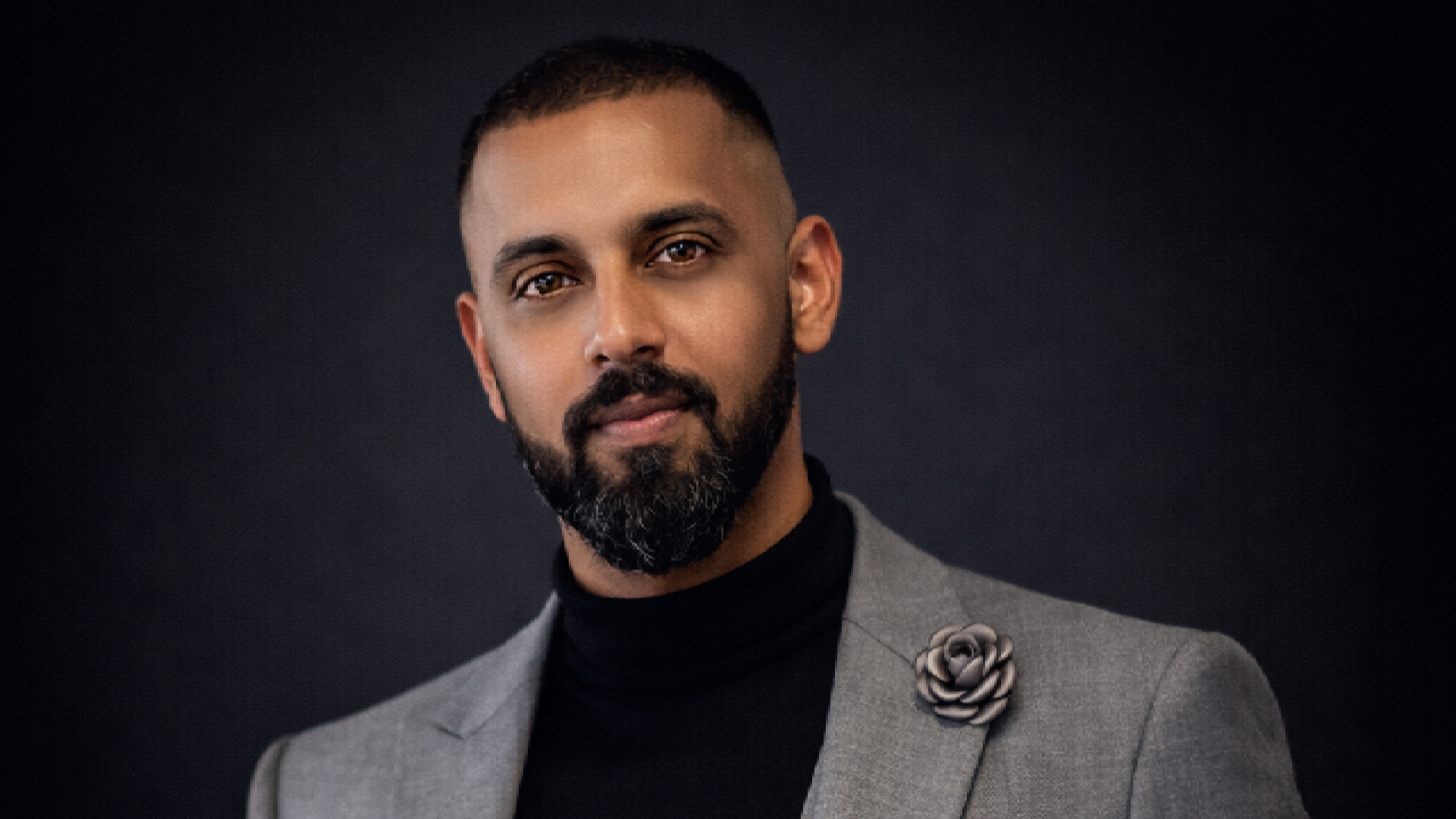
Mozee Khan did not set out to start a padel business. In fact, Racket Rescue began at a moment when business—as he knew it—had collapsed entirely. After more than a decade running a logistics company, Mozee found himself facing mounting debt, a newborn child, and the panic of watching everything he had built fall away at once.
What followed was not a dramatic reinvention, but something smaller and more honest: a broken racket, no money to replace it, and a decision to fix what was directly in front of him. From that moment, a new business emerged—one built on problem-solving, resilience, and an expanding sense of responsibility to people beyond himself.
Stefan le Roux sat down with Mozee Khan to trace that journey—from a Durban upbringing shaped by discipline and responsibility, through the collapse of a long-running logistics business, to the hard-earned clarity that comes from rebuilding with fewer illusions and deeper resolve.
The Good Business Journal: Mozee, let’s start at the beginning. Where did you grow up, and what shaped you early on?
Mozee:
I was born and raised in Durban. I went to George Campbell Technical High School and studied electrical engineering there, back when it was still called Technica Electronics. That environment was very practical. You learned accountability early. If something didn’t work, you were expected to understand why.
After school, I went on to study electronic engineering at university, though I didn’t finish. Around the time of the Confederations Cup, I worked for FIFA, and after that I came back to Durban and started a logistics company.
From quite early on, responsibility shaped me. Having people rely on you changes how you see decisions and consequences.
Stefan: What happened to the logistics business?
Mozee:
The logistics business ran from 2009 until the end of 2023. It wasn’t something small or short-term. It was my life for a long time.
Towards the end of 2023, my wife and I had just bought a house and started building. Everything felt stable. In January 2024, my third child was born. That same weekend, I messaged my suppliers to say I’d be offline for a few days because my child had just arrived.
One of them replied on a Sunday afternoon and said they needed to see me on Monday.
I remember being annoyed, honestly, wondering how something could be so urgent at that time.
On Monday, they told me they were reducing my workload. Within a week, everything started shrinking. Less work. Less cash flow. More pressure. The business didn’t collapse dramatically. It slowly tightened until it couldn’t breathe anymore.
Suddenly, I was sitting with a newborn baby, two other kids, a bond, vehicles, staff salaries, school fees, everything. Debt was piling up, and there wasn’t a clear answer in sight.
Stefan: That’s an enormous amount to carry at once.
Mozee:
It is, and what makes it hard is how quiet it is.
There’s no single moment where everything breaks. You’re constantly trying to hold things together, pulling out investments just to survive and trying to pay staff, banks, insurers, and schools, while still showing up as if you’re fine.
And the hardest part is that people still look at you as someone who’s supposed to have it together.
Stefan: What was it that carried you through all of that?
Mozee:
Faith played a big role. The Quran is foundational for me. Alongside that, I read constantly, not for comfort, but for structure.
I read a lot of self-help and philosophy. One book that stayed with me was The Richest Man in Babylon. It forces you to confront responsibility and consequence rather than wait for relief.
More than anything, I had to be brutally honest with myself. Mental toughness isn’t about pretending you’re strong. It’s about staying present when avoidance feels easier.
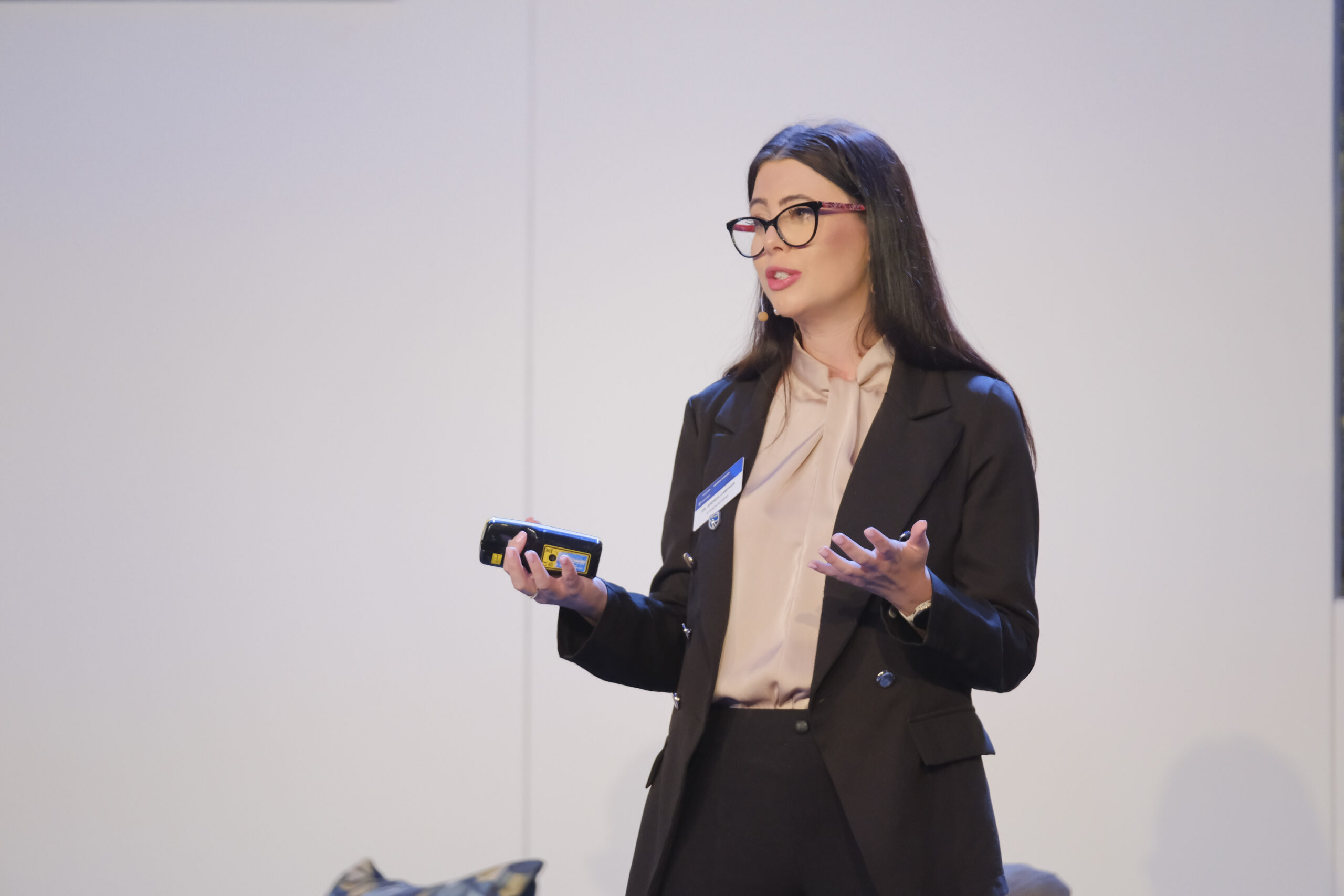
Stefan: At what point did padel become part of your story?
Mozee:
I’d been playing padel for a few months while the logistics business was still running. It was never a serious focus. It was just something I used to switch off mentally.
When finances became tight, padel was one of the first things I stopped. I couldn’t justify spending money on it anymore. Everything had to go towards the house, the kids, and just keeping things afloat.
But my friends kept pushing me to come back. They could see I wasn’t in a good space and didn’t want me to disappear completely. During that time, I broke my racket. I remember thinking, “I can’t replace this.” I genuinely didn’t have the money.
So I tried fixing it myself. The first attempt failed. I put it away. A few days later, I tried again, and this time it worked. When I went back onto the court, someone noticed and asked what I’d done. I told him I fixed it myself, and he said, “Fix mine. I’ll pay you.”
At that point, decisions were very basic: fuel, bread, or milk. I took the racket.
That’s where Racket Rescue started, not as a plan, but as a response to circumstance.
Stefan: Where is Racket Rescue today?
Mozee:
For a long time, it was just me repairing rackets on my own. Slowly, it started becoming more structured.
One of the most important decisions I made was bringing some of the guys over from my logistics business. They had stood by me for years, and I couldn’t just leave them behind. They have families and responsibilities, and I felt a responsibility towards them as well.
Since formally launching in late 2024, Racket Rescue has grown into a team of approximately a dozen people. We now operate a logistics system that allows us to service clients beyond South Africa. Along the way, the business has won four national awards and, by January 2026, was nominated for a continental African award.
Those milestones matter, not for ego, but because they validate the discipline behind the work.
Stefan: What advice do you have for someone who might be going through a similar situation as you did when your logistics company folded?
Mozee:
I think the biggest thing is resilience, but not the kind people talk about when everything is going well.
When things fall apart, you have to accept where you are. You can’t pretend it’s fine or try to protect your ego. You deal with what’s in front of you, one thing at a time.
For me, a big part of that was being honest. Honest with myself, and honest with people I owed money to. Once I started having those conversations—with schools, banks, creditors—it didn’t fix everything, but it made it manageable. It gave me some breathing room.
Something a lot of people don’t realise is that if you’re in financial distress, banks will listen if you go to them honestly. If you sit down and have a proper conversation about a payment plan, they’re often more willing to work with you than people expect.
And then you just keep going. There are days when there’s no motivation, no optimism, but you still show up and do what you need to do. That consistency is what carries you through.
Stefan: It takes a lot of guts and humility to sit down with your creditors and have an honest conversation like that.
Mozee:
It’s not easy. But peace comes before pride.
You can’t build anything if you’re constantly running from the truth.
Stefan: Sport is a wonderful tool for fostering community, and your story is such a potent reminder of that. Can you talk a bit about the community that is growing around padel and your involvement?
Mozee:
One of the things that stood out to me early on with padel is how inclusive it can be, but also how easy it is for people to be left out if they can’t afford it. That’s something I became very aware of once I was on the other side of that equation myself.

As Racket Rescue started growing, I realised the business couldn’t just be about fixing rackets. It had to be about creating access. That’s where initiatives like Rescuers came from. It’s a way for people to earn within the padel ecosystem without needing capital upfront. People act as connectors within their local padel communities—they bring in damaged rackets, we handle the repair, guarantees, and logistics, and they earn commission. It gives people confidence, income, and a place in the sport.
Replay came from a similar place. There are hundreds of thousands of damaged rackets sitting unused, and they don’t decompose. Instead of letting them go to waste, we take them in, repair them, and redistribute them to under-resourced communities. Padel is the fastest-growing sport in the world, and it’s inevitably heading toward Olympic recognition. There are talented kids in communities who’ve never touched a racket simply because they’ve never had access to one, and we want to give those kids every chance to win glory for our country.
Stefan: You have had staff with you for many years. What defines your leadership?
Mozee:
I try to treat people the way I would want to be treated myself, especially when things are difficult.
You have to understand that everybody goes through problems. Your staff are no different. How you treat people in those moments of trouble makes a world of difference to how they react—not just to the work, but to their own problems as well.
Stefan: If you could give a piece of advice to your younger self, what would it be?
Mozee:
Two things:
First, protect your playbook longer than you think you should.
Second, and this one stays with me, the quote that haunts and fuels me is: “What’s this new thing you started now?” Those words came from someone very close to me.
They push me every day, not out of anger, but out of determination. They remind me that I need to make this work, not to prove anything to anyone else, but to prove to myself that endurance counts.
Stefan: What advice do you have for a young entrepreneur?
Mozee:
Resilience isn’t motivation. It’s consistency.
You show up when things aren’t working. You deal with what’s in front of you one problem at a time. That’s what gives you a real chance.
Stefan: Finally, if you were speaking to a foreign investor considering South Africa, what would you tell them?
Mozee:
South Africa doesn’t need saving. It needs participation.
We have land, talent, resilience, and opportunity. Execution matters. Systems matter. People willing to work through complexity will find value here.
Mozee speaks about resilience without romance, about leadership as an act of awareness, and about honesty as a prerequisite for peace rather than a moral ideal. His reflections are grounded in lived consequence—paying school fees, facing creditors, carrying responsibility for others—and shaped by the discipline of dealing with what is directly in front of you. In a landscape where entrepreneurship is often framed as vision and velocity, Mozee’s wisdom is pragmatic: show up, tell the truth, treat people well when it’s hardest, and keep moving forward one problem at a time.
Every week, The GBJ editorial team sits down with some of South Africa’s best. With a tenacity and spirit that can create success out of nothing more than a glimmer of hope, we believe South African businesses deserve a platform to tell their stories.
Born from WDR Aspen, The GBJ wants to ask you: how are you telling your story? Reach out and let us help you with your voice.