
Stefan:
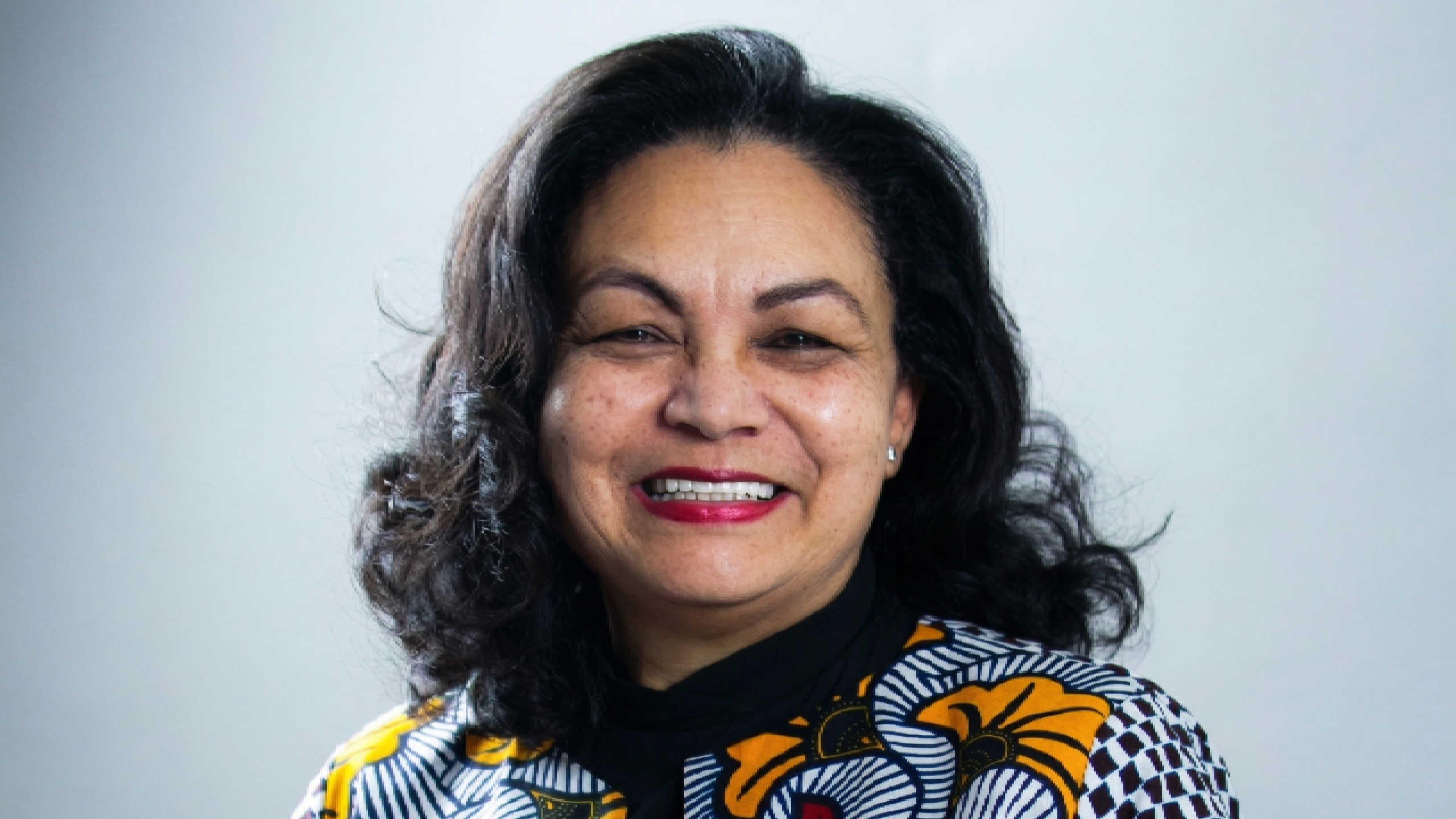
Devina Kowlas may now be known in Durban business circles for the company she built alongside her husband, and to television audiences through The Mommy Club: Sugar & Spice. While her story moves through Phoenix, Richards Bay, classrooms, entrepreneurship, motherhood, and television, it is striking that when reflecting on the experiences that shaped her most, she chooses to dwell on education.
For Kowlas, teaching was never simply a job that came before everything else. It was the foundation that informed how she thinks about leadership, people, and responsibility long after she stepped away from the profession.
Stefan le Roux sat down with Devina Kowlas to unpack the path that led her from the classroom into business and public life—and why, despite everything that followed, it is still her time as an educator that she returns to most.
The Good Business Journal: You tell us about where you grew up and your formative years, and how that shaped the person we see today.
Devina:
I grew up in Durban, in Phoenix, and I always say I had the best childhood. We came from humble beginnings and lived in a council house. My parents focused on academics, faith, humility, and reputation. They taught us to be good people and to do good, and that is still the core of who I try to be in everything I do.
I am the middle daughter of three. My sisters were very much by the book. Then there was me: climbing trees, running with the boys, and generally driving my parents crazy. If a rule didn’t make sense to me, I had no problem questioning it.
I was also very imaginative. I lived in my head a lot as a child, and I still do. I love people, but I’ve always enjoyed my own company as well. That balance is probably why I look back on my childhood with so much fondness.
Stefan: What did life look like after school?
Devina:
When I finished matric, I wanted a bit of adventure. Back then, a gap year was not really a thing in our homes, so I tried to find a compromise with my parents. I registered with UniSA, which they were not thrilled about, and I enrolled for a BCom. That was more my family’s idea than mine.
I wanted to do something like literature, something I actually enjoyed, but the thinking was that commerce would lead to a stable job.
A few months in, I was restless and bored. I had a neighbour who was a teacher in Richards Bay, and she would tell me about living independently and working there. At 18, that sounded incredibly exciting to me. I went with her for what was meant to be just a weekend, and that trip ended up changing the course of my life.
Stefan: How did it change your life?
Devina:
I was studying in the staff room of the school where my friend was teaching when the head of the Afrikaans department came over and asked me what I was doing. We got talking, and he said one of their teachers was on maternity leave and asked if I wanted the job on a temporary governing body post.
I was 18. I had no teaching qualification. I had not planned to be a teacher. I mentioned all of this to him, but he wasn’t phased, so I said yes.
Then he asked, “Can you start today?”
He took me into a Grade 8 classroom, introduced me like I was a proper teacher, and left me there. That was the moment I realised what I had actually agreed to. Up until then it had all felt like an adventure. Suddenly, I was standing in front of a room full of teenagers, and I thought, what have I gotten myself into?
But I took to it in stride. I really did. I found that I was comfortable at the front of a classroom. I was loud, outspoken, and I could hold people’s attention. I spoke to the class, figured out what they understood and what they didn’t, and just started from there. It felt natural in a way I had never expected.
Stefan: Being in charge of a classroom at such a young age must have been daunting. Were there any curveball moments early on that really taught you how to handle a classroom?
Devina:
Yes—a Grade 10 class of boys locked me in the classroom on my second day.
They had been suspiciously well-behaved that lesson, so I knew something was up. When the period ended, and I turned around to leave, the door was locked and they had all run off. At first, I panicked, but then I thought, someone is bound to realise I’m missing. Eventually, I was let out, and it became this whole disciplinary matter.
What stayed with me was that I never believed they were being cruel. I thought it was a brilliant joke. It was funny. Of course, there had to be consequences, and the school wanted to suspend them, but I argued against that because it was close to exams, and these were bright boys. In the end, I spoke to them honestly. I told them I understood why they thought it was funny, but also why actions have consequences.
After that, I never had another issue with that class.
I think they responded to being treated seriously. I never believed in coming in with an iron fist. Even then, I wanted conversation before punishment.
Stefan: At what point did you realise teaching was no longer just a detour?
Devina:
Once I stayed, I really stayed. That temporary post became six months, and during that time I started to understand how much the work was shaping me.
Teaching taught me structure when I was not naturally structured. It taught me patience. It taught me leadership. I had to answer to a principal, department heads, staff dynamics, and students, all while still being so young myself. It also taught me how different personalities need different things from you.
I have always loved observing and understanding people, but teaching sharpened that instinct. I had to learn how to read people, how to interact with children without causing harm, and how to keep my own emotional balance intact.
Those were essential skills, and they followed me into every stage of life after that.
I also changed my studies. I carried on teaching while I completed my degree, and eventually I did my BEd because it was clear by then that this was not just something I had stumbled into. It had become part of who I was.
Stefan: You spent a long time teaching at a Muslim school as a practicing Hindu. What did that experience teach you?
Devina:
That was one of the most important periods of my life.
I took a job at a Muslim school in Phoenix mostly because it was convenient. I was tired of travelling by public transport with all my books and bags, and this school was close to home.
I did not even realise how orthodox it was until I got there. I was told I would have to wear a hijab, dress in a very specific way, and include Islamic ethos in my lesson planning.
I just thought, fine, no more taxis.
But once I entered that environment, I realised I was the first and only non-Muslim educator there. The children were shocked. I had to teach boys on one side of a curtain and girls on the other. It was an entirely different world, and yet I embraced the challenge.
What that experience gave me was far bigger than a job. It expanded the way I thought about faith, religion, spiritualism, and humanity. It taught me how much disrespect often comes from misinformation.
It taught me that if you enter a community with genuine respect, people feel that. I never went against their religion or traditions. I showed their children care and respect, and in return, they changed me as much as I taught them.
Many of those students are now adults in their 30s. I’ve attended their weddings. I’ve seen their children. Some became teachers themselves and asked me for advice. That means everything to me.
Later, I moved to another Islamic school where I spent 10 of the best years of my teaching life. My principal there taught me a great deal about leadership—how to lead firmly, but in a way that keeps people happy and dignified. Those years deepened everything I believed about education.
Stefan: What do you think people misunderstand about teaching?
Devina:
They underestimate how much of it has nothing to do with a textbook.
A teacher is not just there to deliver subject content. Teachers shape human beings. We spend more time with children than their parents do. That is not a small responsibility. You are taking something that is impressionable and helping mould it.

That is why I believe teaching is one of the noblest professions. If you are doing it only for an income, you should not be doing it. The best teachers are the ones who understand that it is a calling.
That was certainly true for me. I did not set out to become a teacher. It found me, and once it did, it became part of me.
Even now, long after leaving the classroom, I still think of myself as a teacher. Till I die, I will say that. That is who I am.
Stefan: How did you eventually leave the profession?
Devina:
When my daughter was born in 2013, everything shifted.
I had a very difficult antenatal journey before having her, and once she arrived, I still went back to teaching quite quickly because I had matric students depending on me.
But by the end of that year, my husband and I had to be honest about what our life required. After everything I had gone through to have her, I wanted to be the one raising my child.
At the same time, an opportunity came up for me to move into the insurance space. My husband had already been in that industry for years, and we entered that next chapter together. Eventually, that became the beginning of our entrepreneurial journey. We built from a tiny office with barely any furniture—agents working from laptops on the floor and beach chairs—to what is now one of the largest Sanlam franchises in the country, employing dozens of staff and operating as part of the broader London Group of companies.
Later, I moved into property as a director, which was another intimidating leap because I entered an intensely competitive industry in a director’s position whilst essentially being a novice.
Whilst I was still brushing up on the technicalities, what I brought instead was what teaching had already given me: people skills, trust-building, service, authenticity, and a belief that leadership starts with relationships.
Stefan: You are now also known through The Mommy Club: Sugar & Spice. Judging by our conversation thus far it doesn’t seem like the most obvious fit to me. How did you come to say yes to being involved?
Devina:
Very reluctantly.
I am actually a very private person. My husband is the extrovert. He is comfortable being out there. I am much more comfortable in the background. But when the show was explained to me as something centred on motherhood, that caught my attention, because being a mother is the most important thing I do.
What made me say yes in the end was the possibility of using that platform meaningfully. I did not want to represent only a polished, glamorous idea of motherhood. I wanted to be relatable. I wanted people to see a mother who is present, hands-on, and still deeply shaped by older values.
The show also gave me an opportunity to speak openly about my antenatal story, which opened up important conversations with women who had never felt safe discussing their own experiences.
When I was given the chance to host an event on the show, I chose to do a career day for young people. That came directly from my teaching background. Even in a reality television format, my instincts went back to education.
Stefan: What advice would you give to a young person about to finish school?
Devina:
Do not build your whole life around what other people think success is supposed to look like.
Matric is important, yes, but it is not the only thing that will define you. Build towards something that brings you joy. Choose subjects and a path you can actually see yourself living with. If your goal is just status or to satisfy other people, you may end up successful on paper and miserable in reality.
If you love something enough, and you do it well enough, you can make a life from it. You can make money from it. But you have to be honest with yourself first.
That applies whether you become a teacher, a businessperson, or anything else.
Stefan:
Devina Kowlas’ story has moved through many different rooms—council houses, staff rooms, classrooms, boardrooms, television sets—but the clearest thread between them is her conviction that people matter, and that the work of helping them grow matters even more.