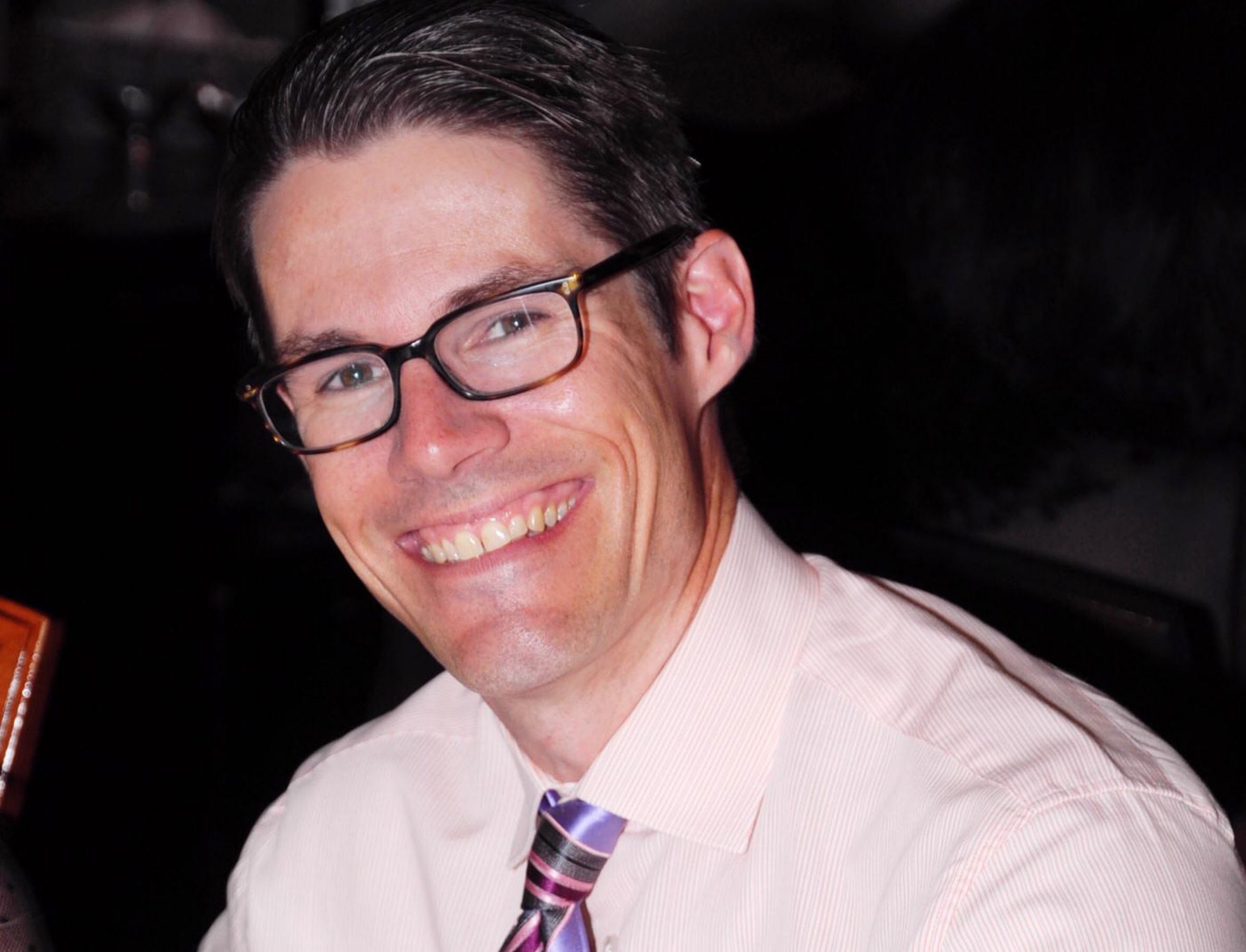
Before LinkedIn existed, a kid from a broken school district in Southern California was quietly preparing to make internet history. That kid was Jon Kelly. The son of a middle-class family from La Mirada, Kelly fought his way from a failing public school system to Stanford University and then straight into the first generation of dot-com entrepreneurs. By 25, he co‑founded eCoverage, the first start-up to sell car insurance entirely online—years before digital commerce was mainstream. When the dot‑com bubble burst, he lost everything. Then he built another company, sold it too soon, and watched it grow into a billion‑dollar empire without him.
Today, Jon Kelly lives in Snowmass, Colorado, where he runs software ventures on his own terms, hikes the Highland Bowl a hundred times a year, and teaches his children that integrity and perseverance outlast any valuation. His story isn’t just about technology—it’s about grit, timing, and the art of letting go.
Q: Jon Kelly, where did you grow up?
Jon:
In a Los Angeles suburb called La Mirada. It was a working-class neighborhood, and to be honest, kind of dysfunctional. The schools were violent and poorly managed—they even shut down the middle schools because the district ran out of money. So I went from kindergarten through seventh grade at one school, then straight to high school for eighth through twelfth. It was chaotic.
Q: That’s a tough launch pad. How did you end up at Stanford?
Jon:
I’ve just always had this obsessive drive to succeed. Even as a kid, I pictured myself as someone who would build things, be successful, create businesses. I did well on standardized tests, had a few teachers who cared, and one principal who made a huge difference. He grouped the top math students together—a little school within a school. That small cluster of motivated kids changed everything for me.
Q: You mentioned defining yourself as a success long before you actually were one.
Jon:
Exactly. I tell my kids this all the time—how you define yourself matters. If you see yourself as the person who goes to the gym five days a week, then that’s just who you are and what you will do. I saw myself as someone who gets straight A’s and goes to a top university. It wasn’t even a question. I just decided that was me.
Q: What was it like landing at Stanford after coming from that environment?
Jon:
Total culture shock. I was the valedictorian of my high school, but I had no real academic skills—didn’t know how to write a paper, didn’t know how to study. My first quarter was rough. Luckily, my dorm had mostly sophomores, and they took me under their wing. They literally taught me how to study. By the second quarter, I found my footing. Then I took Economics 1—and that changed everything. My brain just clicked with it. I ended up double-majoring in econ and political science and graduating with a 3.7 GPA.
Q: Walk me through how a Stanford grad ends up starting the first online insurance company.
Jon:
My first job was in management consulting at Mercer, now Oliver Wyman. I built financial models for big insurers—Prudential, CNA, and Fireman’s Fund. After a couple of years of 90-hour weeks, I burned out and went to Oracle. Around that time—’97, ’98—the web was exploding. I’d been obsessed with it since ’94, before Yahoo was even called Yahoo. A friend called one day and said, “I just got a million dollars from SoftBank to build an internet insurance company.” That was the start of eCoverage.
Q: And SoftBank was already behind Yahoo and E-Trade, right?
Jon:
Exactly. Their marching orders were simple: “Build us an online version of GEICO.” So we did. We wrote all the code ourselves, built the servers, created a real-time rating system, and by 1999, you could go online, buy car insurance, and print your ID cards instantly. Nobody had done that before.
Q: Was there a moment when you realized it was working?
Jon:
Yeah—very soon after we launched. We had this little ticker app running on everyone’s screen that updated every time a policy sold. It started trickling, then it just started flying. We were one of Google’s first advertisers—before AdWords even existed. I bought search ads on a CPM basis for about $25 a thousand impressions. Our cost per acquisition was under $100, and it felt like we’d hacked the future.
Q: Then the dot-com crash hit.
Jon:
Yeah, April 2000. We were about to raise a $50 million Series C with help from Salomon Smith Barney. The mood was euphoric—everyone thought we’d be the next E-Trade or E-Loan. Then the market cratered overnight. Funding vanished, valuations collapsed. We ended up selling to GMAC Insurance for pennies on the dollar. I was 28 and had gone from thinking I’d be worth a hundred million dollars to walking away with nothing.
Q: That’s a massive psychological swing.
Jon:
It didn’t hit me all at once. At first you’re just too busy trying to save what’s left. But when it was finally over, yeah—it was brutal. I remember thinking, I know this concept will work. I just need another shot.
Q: And you got your second shot at it?
Jon:
I did. GMAC kept me on as a consultant, and I partnered with another firm in Oklahoma City that handled their search marketing. Together, we built a new company—an ad network called SureHits. It lets publishers place a small JavaScript snippet on their sites to auction insurance ads in real time. We launched in 2005, went from six-figure revenue to $35 million in two years, and sold in 2008.
Q: That’s a wild rebound, right?
Jon:
It was. We were early to the pay-per-click model outside of Google and Yahoo. And this time, I made real money—eight figures. But we sold too soon. Within two years the acquirer tripled revenue, went public, and the product became a huge part of their business. If I’d held on and continued to invest in and grow the business, I’d probably be worth half a billion myself.
Q: Was that harder than the first loss?
Jon:
Much harder. Losing everything the first time was painful, but watching what you built become enormous without you—that can be much harder. The best advice I got was this: You can’t wish for your exact life, just with an extra 500 million dollars—meaning you can’t cherry-pick your current happiness, family, and sense of self, and simply insert wealth into that equation without changing everything else that comes with it.

If one major event changes, everything changes—your relationships, your kids, your path. You can’t separate the good from the bad. And honestly, I love my life. I live in the mountains, my family’s wonderful and healthy, and I get to ski and build things I care about. How do you complain about that?
Q: Looking back, what’s the biggest lesson?
Jon:
That the limits people think exist are usually imaginary. At eCoverage, the most respected executives in insurance told us that selling policies online was crazy. They couldn’t see beyond the way things had always been done. That experience taught me to never let someone else’s assumptions define what’s possible.
Q: And the other lesson?
Jon:
Work with good people. The Oklahoma City team that helped me build SureHits was the best I ever had—loyal, driven, grounded. Silicon Valley had talent, but it was mercenary. Everyone was chasing the next salary bump or stock grant. In Oklahoma, commitment still meant something.
Q: You’ve also seen the dark side of business—the lawsuits, the fraud.
Jon:
Yeah, once there’s real money on the table, integrity gets tested. We caught partners forging ads, filing frivolous suits, you name it. There’s a whole sub-industry built on exploiting loopholes. The older I get, the more I value working with people who simply do what they say they’ll do.
Q: You’ve said before that you measure success differently now.
Jon:
Completely. I used to equate it with valuation and exits. Now, it’s freedom and time spent with people I care about. I still build software companies, I still invest, but I structure my life around the mountains and my family and passions. I’ve hiked Aspen’s Highland Bowl nearly 700 times. My goal is 1,000 laps in ten years. That rhythm—work early, ski at lunch, finish in the afternoon—that’s success to me.
Q: If you could go back and give that young Stanford graduate a piece of advice, what would it be?
Jon:
Buy Google stock. Lots of it. (laughs) But seriously—choose partners as carefully as you choose opportunities. Integrity compounds faster than capital. And remember: the highs and lows don’t define you; your relationships and what you build defines you.
In the end, Jon Kelly’s story isn’t just about timing or technology—it’s about perspective. The kid from a broken school system built one of the internet’s first financial platforms, lost it all, rebuilt from scratch, and walked away with wisdom that money can’t buy. For entrepreneurs everywhere—especially those still climbing—the message is simple: build boldly, lose gracefully, and keep moving upward.
Every week, The GBJ editorial team sits down with some of South Africa’s best. With a tenacity and spirit that can create success out of nothing more than a glimmer of hope, we believe South African businesses deserve a platform to tell their stories.
Born from WDR Aspen, The GBJ wants to ask you: how are you telling your story? Reach out and let us help you with your voice.