I get asked this question at least once a week: Is local newsprint advertising dead?
The short answer? Absolutely not.
Don’t get me wrong, it’s a great question.
But in small luxury resort towns across Colorado, local newsprint advertising, across both print and digital editions, continues to be one of the most effective ways to reach locals, tourists, and second homeowners alike. And while it’s certainly not the only way to reach those audiences, it’s still a vital part of a marketing mix, if done right.
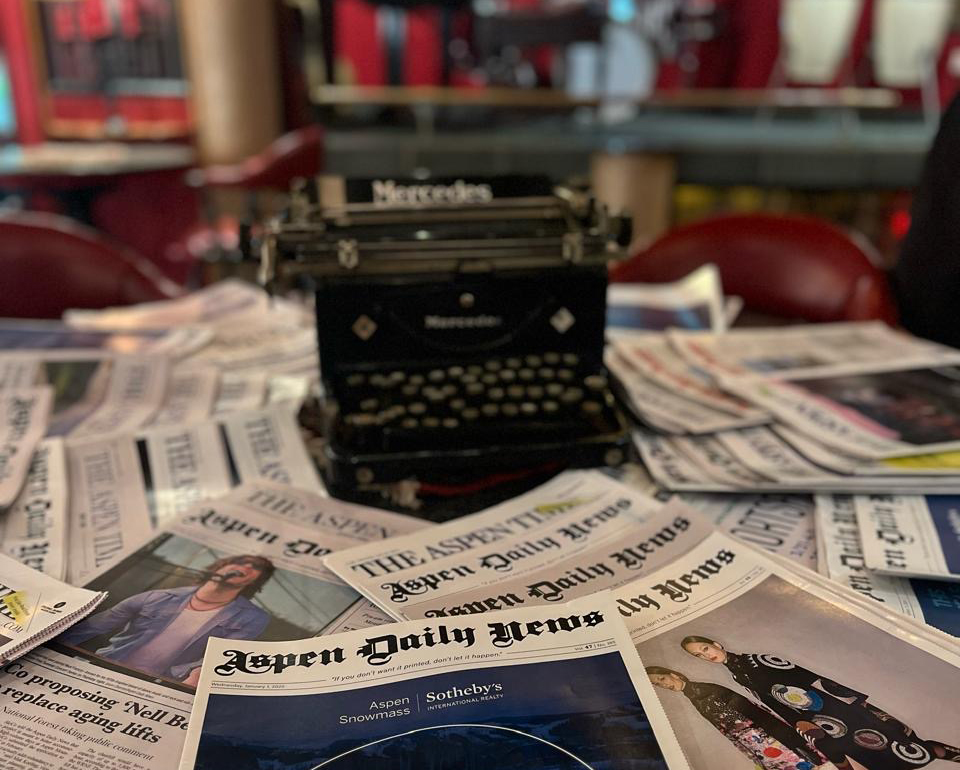
For this piece, let’s define the scope: when I say “local newsprint,” I’m talking about both the physical and online versions of The Aspen Times, Aspen Daily News, and the Glenwood Springs Post Independent. These are the voices of our valley. They are keeping tabs on our local government, sports, nonprofits, the arts, business, and everything in between. And they’re still the first place many residents turn when they want to know what’s happening around here.
That kind of local trust and engagement is exactly why we continue to see considerable success with newsprint campaigns. At our agency, we work with clients who still invest in local newspaper ads, and we see results. Flip through the papers this week and you’ll absolutely spot a few. But just like any good campaign, success in print isn’t automatic. You need to do it with intention. That means thinking about your messaging, frequency, creative, and placement, and tying it into your broader marketing strategy. Because no matter the platform—print, Instagram, CTV—success comes from aligning all the right pieces.

Why does local newsprint advertising still work?
As I’ve said before, marketing isn’t just about showing up. It’s about showing up in the right place, at the right time, with the right message. Especially when running newsprint in towns like ours.
And why? Well, it’s simple. Because people still read the paper.
Think about it: Facebook doesn’t have reporters sitting in Aspen or Glenwood city council meetings. TikTok isn’t covering Basalt High School sports. Instagram isn’t running down the story behind a controversial land use vote or covering the next Aspen Words speaker. When the Denver media talks about the Roaring Fork Valley, it’s often because someone famous got arrested or bought a house.
But local papers and on-the-ground reporters? They’re here every day. At the meetings. At the events. Doing the work. And even when they miss the mark (hey, who doesn’t?), they’re still keeping the pulse of OUR valley alive. That deserves support.
Since COVID-19, the way we consume that reporting may have changed, but the appetite for it hasn’t. More people, especially second homeowners, are reading the local papers online. They want to stay connected to this place they love, even when they’re not here.
So, the value of a print ad? It’s beyond what’s picked up at Local Coffee House or Paradise Bakery. It’s also what’s clicked on from the Upper East Side, the Bay Area, or Denver. Reach isn’t limited to local street corners anymore.

So, if more people are reading local news online, does that mean print is less important? Not at all. It makes your placement even more powerful because those ads show up in both formats.
Like any marketing channel, newsprint works best when it’s backed by a clear strategy. The most successful campaigns don’t treat print as a standalone channel. They consider how it connects to the business’s Google business listing, its website, its social media, its CRM, and its customer experience. They measure what they can. They stay consistent. And most importantly, they plan ahead.
At WDR Aspen, we often say that there’s no silver bullet when it comes to marketing. There’s no one-size-fits-all solution. The real key is figuring out what makes sense for your business, in your season, with your goals, and then committing to doing it well. For some businesses, that includes newspaper ads. For others, it might not. But dismissing local newsprint advertising altogether? That’s a mistake we’ve seen too many make without considering the consequences.
In upcoming columns, we’ll get into the nitty-gritty: What makes a newspaper ad work well? What should it look like? How do you write for the page versus the screen? And how should it fit into your larger marketing efforts?
But for now, if you’re wondering whether local newspaper advertising is dead, here’s the bottom line: not here, not now, and not anytime soon.
Bryan Welker lives and breathes business and marketing in the Roaring Fork Valley and beyond. He is President, Co-founder, and CRO of WDR Aspen, a boutique marketing agency that develops tailored marketing solutions. Learn more at wdraspen.com.
This article was originally published by The Aspen Times.