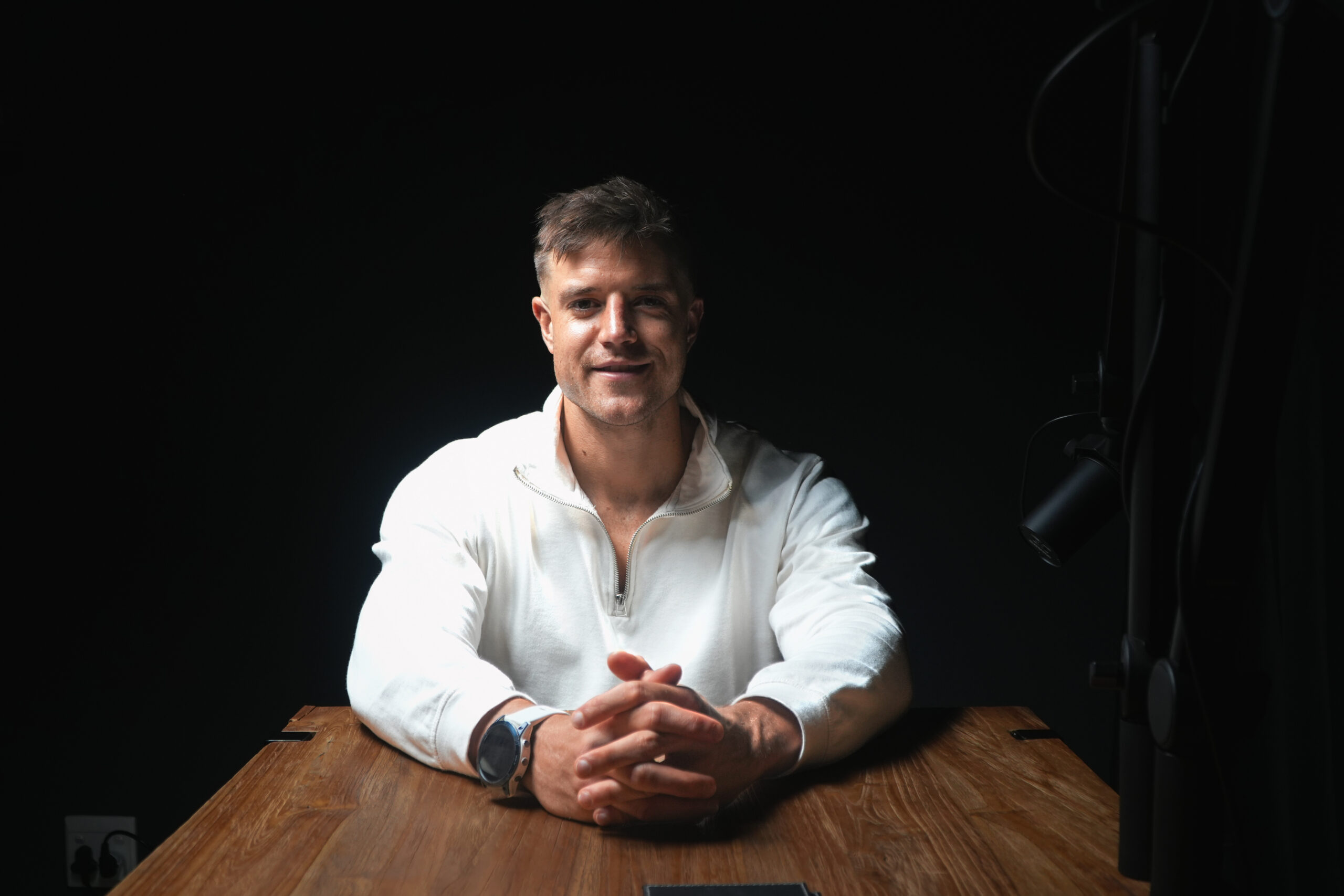
Stefan:
At some point, every founder faces a choice: keep the safety nets, or burn the boats.
For Jesse Pretorius, building Jesster Studios meant committing fully to a market that barely existed. What began as a home‑recorded podcast evolved into a professional studio—sustained through slow months, self‑funding, and the refusal to retreat.
Stefan le Roux sat down with Jesse to trace the path toward fully committing to what he was most passionate about and how scaling without sacrificing freedom is the aim of the game.
The Good Business Journal: Where did you grow up, and what did your early path look like?
Jesse:
Born and bred in Joburg, I spent my first 18 years in the same area, five minutes from school, and stayed there until matric. After that, I went to the University of Pretoria.
I’ve never been certain about the direction I wanted to take. Even now, with a solid business, I’m still figuring out where I’m headed. I try to stay fluid—open to change, open to pivoting, and willing to follow where my interests naturally lead.
Stefan: What did you study, and when did business first enter the picture?
Jesse:
Teaching was the only degree I was accepted into.
I wanted to study a BSc, but my maths mark wasn’t good enough. I used to believe your maths result determined your future—that if you were good at maths and science, you’d automatically succeed. I later realised that school marks don’t directly dictate what you can achieve.
While studying, I started online personal training. That was my first real taste of business. I was earning more than teachers at the time, and I began questioning the conventional path. I valued being able to control my time, meet my commitments on my terms, and build something for myself.
Freedom became the priority—freedom of time, choice, and lifestyle. I realised life doesn’t have to follow the standard university-to-corporate script.
Stefan: How did you go from online training to marketing?
Jesse:
In my third year, I started a marketing company alongside the online training. I’d been active on social media and had figured out what worked—well enough to get results.
A girl I went to school with had a dad who owned one of the biggest real estate companies in South Africa. He reached out about a Pretoria branch with weak social media and asked if I’d manage it—posts, paid ads, the lot. He took a leap of faith.
The work went well, and soon I was handling multiple branches. My dad then asked me to manage his company’s social media too. I said yes to every opportunity, and momentum built from there.
I still finished the teaching degree. My parents had paid for it, and I wanted the safety net. Worst-case scenario, I could teach anywhere—it’s internationally recognised and always in demand.
Stefan: Where did the podcasting studio idea actually come from?
Jesse:
In my final year, I was creating vlog content—mostly gym and student-life videos.
I started recording my own podcast from my flat.
Soon, real estate agents began asking to use the space to record intro videos and property commentary. I had the equipment and editing experience, but no pricing structure—I was figuring it out as I went.
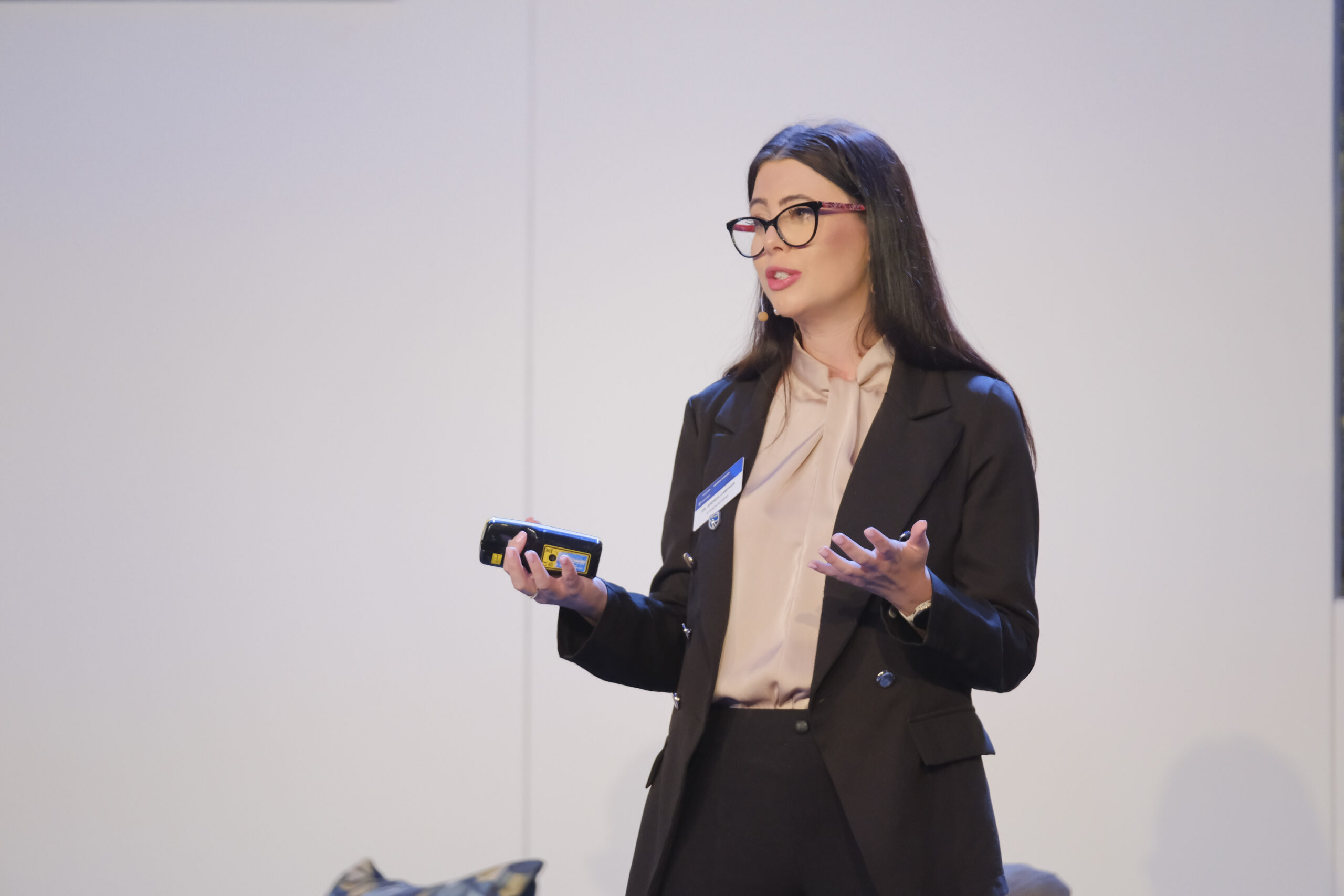
When multiple people asked to use the space within a week, I realised there was a business opportunity. Then three financial advisors showed interest but said the setup didn’t have the professional look and feel they needed. That was the turning point.
Stefan: How did you solve the “professional space” problem?
Jesse:
I won’t pretend luck didn’t play a role. My dad owned the offices I’m in now, and when a tenant left, I asked to take over the space. He gave me a favourable rate.
That allowed me to offer the professional look and feel those financial advisors wanted. Growth was slow at first—sometimes just one client a month.
I could sustain it because I still had income from the marketing company and online training. That gave me the runway to fund the studio while it found its footing.
Stefan: Do you think it’s essential to have multiple income streams while building something?
Jesse:
It’s subjective. In my case, I needed other income streams to fund equipment and rent. Without them, I wouldn’t have been able to grow or deliver what clients expected.
If you have savings and a runway, you can focus on one thing. If not, you need something to support you while the business gains traction.
By 2023, I shut down the marketing company. The year before, I’d ended the online training. No plan B. The studio was the scalable play.
I leaned into the “burn the boats” mindset—if I tried to grow three businesses at once, I’d be spread too thin. Going all in on what I was most passionate about made the difference.
And passion matters. If you’re not genuinely inspired by what you’re building, it eventually shows.
Stefan: Burn the boats. What does that mean exactly?
Jesse:
It’s the idea of removing your escape route. When Hernan Cortez and the conquistadors landed in Mexico, he burned his ships in order to force his men into an all-or-nothing mindset. At some point in life you’ll face a situation where you have to fully commit; a situation where you have to burn the boats.
Stefan: What was the hardest part of the early days?
Jesse:
There was no market in South Africa for it. It sounds egotistical, but I think I was ahead of the time.
There was a period—about four months—of zero clients. No inquiries. Nothing. Month after month, covering expenses, making zero cash. On the fourth month, I was close to thinking maybe this isn’t viable.
Then February came and there were like 15 bookings. It was three years of questioning—should I stop? And eventually, not listening to the questioning paid off.
Biting the bullet has always paid off, even if not in the way you initially expected it to.
Stefan: What kept you going when you were doubting it?
Jesse:
I looked at it like a hero’s journey. If you watch a movie its never just smooth sailing for the hero. There’s an arc I saw that time as mine.

Stefan: How important is fitness to how you perform in business?
Jesse: For me, it’s everything. I don’t work for money. I do, obviously, but I work for the free time I can create to train, trail run, cycle and be outdoors and active.
Training is my number one thing. If I’m working towards an event and I’m eating cleaner, sleeping better, I’m more motivated at work. If I look after myself, I find myself looking after the business better.
Stefan: What does “success” look like five years from now?
Jesse:
Success, to me, means creating opportunities—employing people, improving their standard of living, and supporting those who don’t want to follow a conventional path.
Expanding is another metric for success, but ultimately, there’s a trade-off. More studios mean more responsibility and less personal freedom. My definition of success is having the freedom of my own time. If I can scale without sacrificing that, then it’s worth it.
I’ve always envisioned multiple studios—at one point I wrote “three studios by 2026.” That may still happen. But I’ve learned that growth comes more naturally when I’m not obsessing over it.
Stefan: One piece of advice for someone starting a business?
Jesse:
Patience.
Reinvest in the business and don’t build it just for the money. The less I fixated on income, the more it grew.
Most months, I put around 95% of my profit back into the business. Pay yourself modestly, reinvest consistently, and focus on creating more value for your clients. The rewards compound over time.
I’ve been blessed to be around successful business people—and no matter how successful they are, they’re never content. They never arrive. So I tried to enjoy every step.
My dad even tells me that he sometimes misses the grind of the early days, so enjoy it while you’re in that phase.
Stefan: What do you look for when hiring?
Jesse:
It depends on the role. Hunger is great for marketing or growth roles. But for someone client-facing, it’s about how they make clients feel at home.
I don’t hire for qualifications. It’s how someone conducts themselves, their confidence, how they show up—then how clients respond afterwards.
Stefan: We are all very aware of factors that make it hard to do business in South Africa. Can you spot a silver lining?
Jesse:
The challenges create opportunity. I’ve run this business for six years with minimal competition—how often does that happen?
The challenges we face make people hesitant to take risks, which means there’s a gap for those willing to do so.
I know you should never say never—but I’ve never wanted to leave. The so‑called greener pastures don’t exist.
Stefan:
The market may have been slow to arrive, but Jesse chose to go all in anyway. And in the end, that’s the real lesson: commit to your passion, stay patient, and when the time comes, burn the boats.
Every week, The GBJ editorial team sits down with some of South Africa’s best. With a tenacity and spirit that can create success out of nothing more than a glimmer of hope, we believe South African businesses deserve a platform to tell their stories.
Born from WDR Aspen, The GBJ wants to ask you: how are you telling your story? Reach out and let us help you with your voice.