Bryan:
There are entrepreneurs who enter established industries, and then there are those who step into places where no path exists at all. The builders. The ones who move into uncertainty not because it’s safe, but because it’s necessary.
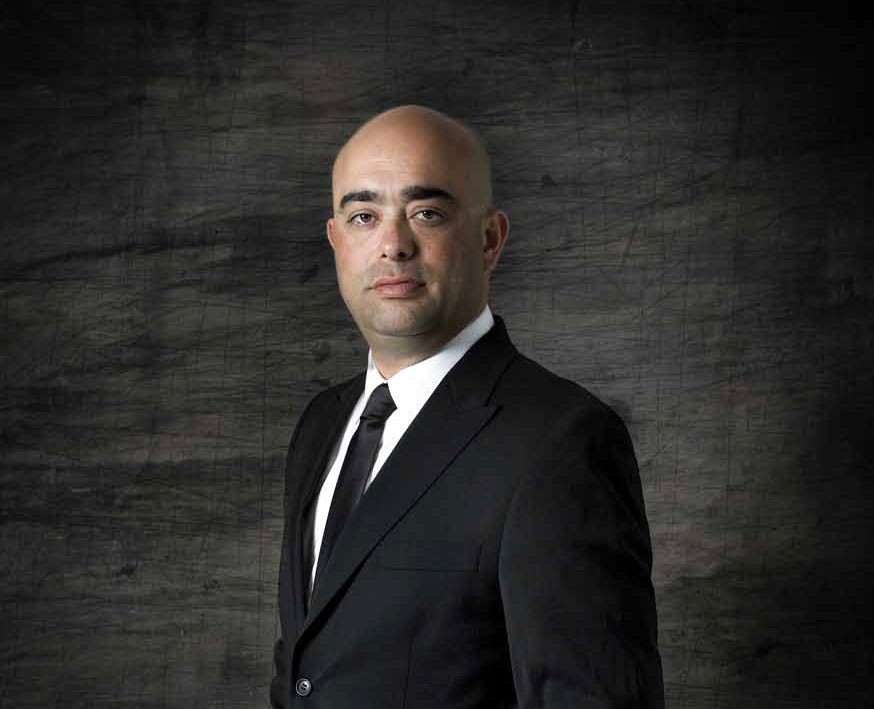
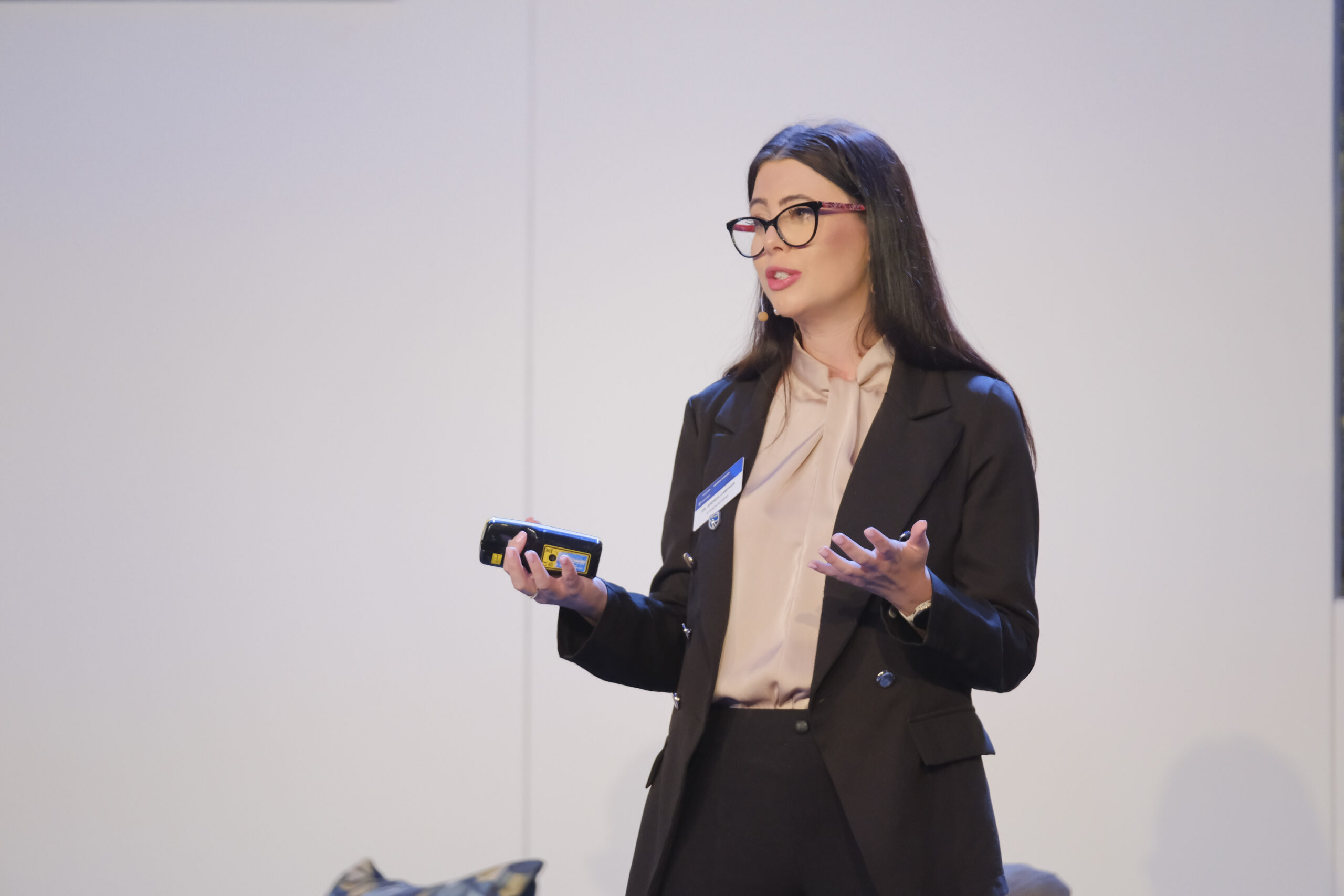
Pedro Camacho is one of those builders.
As the founder and CEO of Blue Sky Satellite Communications, he has spent nearly 30 years creating connectivity in places where most saw only volatility—from conflict zones to rural villages to countries just beginning to modernize. Long before Africa had a reliable telecommunications grid, Pedro was already laying the groundwork through satellite innovation, Aerial Fibre, and a belief that communication is the foundation of progress.
Bryan Welker and Stefan le Roux sat down with the Johannesburg-based founder to trace his story—from a childhood steeped in political turbulence to a single banner-ad click that evolved into a telecommunications empire. What emerged is a portrait of a leader who believes communication is the fastest route to peace, opportunity, and shared progress.
The Good Business Journal: Welcome, Pedro. Tell us the beginning, where did your relationship with communication and technology come from?
Pedro:
I’m a second-generation Portuguese immigrant to South Africa, the firstborn son of an air force pilot turned entrepreneur. My father came to South Africa in 1965 from Portugal via Mozambique after serving his military duty—he drove thousands of kilometres in the iconic Fiat 500 to Johannesburg to set up shop.
I grew up during the height of Apartheid and political destabilization. My childhood and schooling meant my programming was peppered with politics and social violence. I concluded early that communication vs politics would be a quicker key to peace, which is why I gravitated towards the former.
I was also on the forefront of the introduction of the internet, an early adopter when it was still a dinosaur dial-up modem. I remember noting when Checkers launched the first online ordering and home delivery system way back in 1985. I knew instantly that they were onto something and that this was what the future looked like.
Bryan: Tell us about your studies. Did you go to University?
Pedro:
Yes. While studying and getting my degrees in business law and business management, I also started my first business at eighteen, importing Harley-Davidsons from the USA. I did that until I was twenty-three.
I also say I have a BSC—a Behind the Shop Counter degree. Working in my father’s store from the age of five taught me how to deal with people exceptionally well.
Bryan: And then, after the successful sale of your Harley-Davidson business, what came next?
Pedro:
A fortuitous moment in an internet café. A banner ad for COMSAT popped up for a satellite phone and sparked my curiosity. I ordered my first phone, later trained and collaborated with the company, and eventually secured exclusive rights and licensing for their phones across the African continent.
Bryan: And nearly three decades later, here we are—you built an entire empire from a single click in an internet café. What does that mean to you?
Pedro:
It emphasizes the unexplored potential sitting at our fingertips. The internet can change the trajectory of a life in a second.
Bryan: Could you share some of your hard lessons?
Pedro:
The hardest lesson I had to learn was that “nice” and “good” are two different things. Being good matters, but being nice can get you in trouble. I learned the power of the word no—and that “no” is a full sentence.
Bryan: I fully agree. The ability to say no is a superpower. But that requires experience and self-preservation, doesn’t it?
Pedro:
Yes—experience, and learning to be kind to yourself. Only say yes to what won’t compromise you.
Bryan: We are philosophically aligned! What is exciting you right now?
Pedro:
A lot! We’re expanding into exciting new areas such as cybersecurity and cloud services. This lets us offer clients a fully blended ecosystem of communication add-ons they can build according to needs and affordability. Our aim is simple: make communication available and accessible for everyone. The challenge excites me.
Stefan: What do you look for in an employee?
Pedro:
Honesty. Everything can be worked out if we are operating from the truth. If I don’t have the facts, I can’t fix the problem.
The truth doesn’t only set you free, it makes you rich.
Bryan: Agreed. I make good decisions when I have good information. Tell us more about your company’s mechanics and team structure.
Pedro:
I run a small internal team. Instead of expanding headcount, I train people to do the work I need and then help them set up their own business doing it. When we need their skills, we contract them in.
The result? I have access to over 300 people on the ground, without being HR-heavy. And I have empowered many start-ups. That’s good business to me.
Stefan: You could obviously dominate a larger portion of the market share if you did everything yourself, but that model allows other players to share in the spoils. It’s lean and efficient but also empowering. Is giving back important to you?
Pedro:
Absolutely. If you are blessed, you should bless others. Help where you can. You can’t take anything with you to the grave.

Stefan: What are your feelings on AI?
Pedro:
AI-generated content online went from 5% last year to about 65% this year. That means very soon, we won’t be able to believe anything we see.
AI isn’t good or bad. It has the potential to be both incredibly useful and incredibly disruptive. We should proceed with caution and accountability every step of the way.
Stefan: Do you have any words of advice or inspiration for young entrepreneurs?
Pedro:
Faith and belief. Regardless of what your faith base is, you need something bigger than yourself to call on when things get tough.
When you hit rock bottom, you learn it has two further basements. You need belief to get you up and out.
Stefan: What’s the vision for Blue Sky Satellite Communications moving forward?
Pedro:
We are building connectivity with cutting-edge technology, including a skybound wireless mesh that lets us deliver world-class, affordable access in any environment.
Our vision is simple: connect each and all, no matter their circumstances. I believe in creating miracles, and having access to the internet can facilitate that.
Stefan: I think South Africans have, for a long time, seen ourselves as the oldest sibling in the family of the African continent, and I think it’s motivating for us to hear that the younger siblings are catching up. You’ve spent decades working throughout the greater continent, what have you seen?
Pedro:
Over the past three decades, I’ve seen countries grow from dirt roads to thriving cities. Angola is a standout. Today, Luanda has infrastructure and safety rivalling major global cities.
Rwanda is another one—remarkably clean and incredibly well run. Nigeria’s GDP is soaring and has the potential to take South Africa’s G20 spot. Uganda and Zambia, too, are strong, stable, and growing.
Stefan: And finally, what makes South Africa a good investment?
Pedro:
The people. South Africans are a nation of good heart and soul. We are resilient, ambitious, hardworking people.
Bryan
Pedro’s story is a reminder that innovation doesn’t start with perfect conditions—it starts with seeing possibility where others see limitation. From a childhood shaped by a nation in transition to a telecommunications empire that was started with a single click, he has shown how courage, curiosity, and conviction can build the infrastructure for a better future.
Every week, The GBJ editorial team sits down with some of South Africa’s best. With a tenacity and spirit that can create success out of nothing more than a glimmer of hope, we believe South African businesses deserve a platform to tell their stories.
Born from WDR Aspen, The GBJ wants to ask you: how are you telling your story? Reach out and let us help you with your voice.